I was halfway through a Sunday roast when the kitchen turned into a culinary disaster: the onions were burning, the gravy had turned to a chalky mess, and my family’s eyes were already darting to the fridge for a quick fix. I stared at the charred pan, feeling the frustration bubble up like a pot of over‑simmered sauce, and decided then and there that I would not let another dinner be ruined by a lackluster meatball recipe. The moment the first bite hit my tongue, the world seemed to shift—meatballs that were juicy, flavorful, and coated in a mushroom gravy that sang of earth and umami. This dish is a revelation, a bold re‑imagination that turns a simple comfort food into a headline act on any dinner table.
Picture yourself pulling this out of the oven, the whole kitchen smelling incredible, the sound of the meatballs bubbling in the gravy like a cauldron of liquid gold. The sizzle when the pan hits the stove is absolute perfection, the aroma of fresh thyme and mushrooms rises like a promise, and the texture of the meatballs—soft on the inside, with a lightly crisped edge that shatters like thin ice—creates a satisfying contrast in every bite. If you’ve ever struggled with bland meatballs that fall apart, you’re not alone—and I’ve got the fix. I dare you to taste this and not go back for seconds; this is hands down the best version you’ll ever make at home.
What makes this version stand out isn’t just the combination of ingredients but the meticulous attention to technique. I’ve refined the process so that the meatballs maintain moisture, the gravy thickens to silky perfection, and every bite delivers a punch of flavor. The use of fresh mushrooms instead of canned, the gentle simmer of the sauce, and the final flourish of parsley and a dash of Worcestershire sauce bring depth that most recipes miss. And the best part? You can prep the meatballs a day ahead and reheat them without losing any of that lusciousness. So let me walk you through every single step — by the end, you’ll wonder how you ever made it any other way.
Okay, ready for the game‑changer? The secret lies in the balance of the sauce and the texture of the meatballs. The meat isn’t just ground beef; it’s a blend that includes a touch of pork fat for richness, breadcrumbs soaked in milk for tenderness, and a dash of paprika for a subtle warmth. The mushrooms are sautéed until they release their juices, creating a natural broth that thickens the gravy without the need for heavy cream. The final touch? A splash of white wine to deglaze, which adds acidity and complexity that cuts through the richness. Trust me, the first bite will have you saying, “I need more of this!”
What Makes This Version Stand Out
- Taste: The savory depth of fresh mushrooms and the subtle sweetness of caramelized onions combine to create a sauce that feels both hearty and refined.
- Texture: The meatballs stay juicy inside while developing a slightly crisp exterior that gives a satisfying bite.
- Ingredient Quality: Using high‑quality ground beef and fresh herbs ensures a flavor that’s unmistakably premium.
- Uniqueness: The addition of a splash of white wine and a hint of Worcestershire sauce sets this gravy apart from ordinary meatball sauces.
- Crowd Reaction: Friends rave about how the dish feels like a cozy hug in a bowl, and they always ask for the recipe after the first plate.
- Make‑Ahead Potential: The meatballs can be assembled and frozen, then cooked fresh when needed, making it a perfect week‑night savior.
- Cooking Method: A two‑step process—first browning the meatballs, then simmering them in the mushroom gravy—maximizes flavor extraction.
- Flavor Layering: Each ingredient is introduced at the right moment to build complexity without overwhelming the palate.
Inside the Ingredient List
The Flavor Base
At the heart of this dish is the combination of fresh onions, garlic, and mushrooms. The onions are finely diced and sautéed until translucent, releasing a sweet aroma that sets the tone. Garlic is minced so it blends seamlessly, providing a punch of sharpness that balances the earthiness of mushrooms. If you skip the onions, the sauce will feel flat; the garlic alone won’t carry the same depth. A quick swap for shallots can add a subtle floral note, but keep the mushrooms for that robust, meaty texture.
The Texture Crew
Ground beef is the star, but adding a little pork fat or beef short rib fat elevates juiciness. Breadcrumbs soaked in milk soften the meatball matrix, preventing dryness. An egg binds the mixture, ensuring the meatballs hold together during cooking. If you’re vegan, substitute a plant‑based binder like a flaxseed mixture. The ratio of breadcrumbs to meat is critical: too many and the meatballs become cakey; too few and they crumble. A small pinch of baking powder can help maintain a tender crumb.
The Unexpected Star
White wine is the secret weapon that lifts the entire sauce. Deglazing the pan with a splash of dry white wine after browning the meatballs pulls up all the caramelized bits, adding a subtle acidity that brightens the dish. If you’re not a fan of wine, a splash of beef broth or a squeeze of lemon juice can serve as a stand‑in, but the flavor profile will shift slightly. This ingredient is optional but highly recommended for those seeking depth.
The Final Flourish
Fresh parsley, a dash of Worcestershire sauce, and a pinch of thyme finish the gravy with a burst of herbaceous brightness. The Worcestershire sauce adds a briny complexity that cuts through the richness of the beef and mushroom mixture. If you prefer a milder taste, reduce the Worcestershire to half a teaspoon. The final sprinkle of parsley not only adds color but also a fresh, bright counterpoint to the savory sauce.
Everything's prepped? Good. Let's get into the real action.
The Method — Step by Step
- In a large mixing bowl, combine the ground beef, pork fat, breadcrumbs soaked in milk, egg, finely chopped onion, minced garlic, salt, pepper, paprika, thyme, and a pinch of baking powder. Mix with clean hands until just blended; over‑mixing will make the meatballs tough. This is the moment of truth—feel the mixture’s texture; it should be moist but not sticky. Let the mixture rest for 10 minutes; this allows the breadcrumbs to absorb the liquid, ensuring tender meatballs.
- Shape the mixture into golf‑ball sized meatballs using a small cookie scoop or your hands. Place them on a parchment‑lined tray and refrigerate for 15 minutes to firm up. This step is crucial for maintaining shape during frying. While the meatballs chill, heat a large skillet over medium heat and add a tablespoon of olive oil. When the oil shimmers, add the meatballs in batches, ensuring not to crowd the pan. Brown them on all sides; they should develop a golden crust that seals in juices. Remove the browned meatballs and set aside on a plate.
- In the same skillet, reduce heat to low and add the sliced mushrooms. Sauté until they release their moisture and begin to brown, about 5 minutes. Add the chopped onions and cook until translucent, stirring frequently. The aroma that emerges is the foundation of the gravy. This step is where the flavor builds; keep an eye on the heat to avoid burning the onions. If the mixture looks dry, splash a teaspoon of beef broth to deglaze the pan, scraping up all the browned bits.
- Stir in the tomato paste and cook for 2 minutes, letting it caramelize slightly. The tomato paste adds body and a subtle sweetness that balances the mushroom’s earthiness. Then pour in the white wine, letting it reduce by half—this removes the raw alcohol taste and concentrates the flavor. While the wine evaporates, the sauce should thicken a little, indicating that the base is ready for the next phase.
- Return the browned meatballs to the skillet. Add the beef broth, Worcestershire sauce, and a splash of soy sauce for depth. Bring the mixture to a gentle simmer, cover, and let it cook for 20 minutes, turning the meatballs occasionally. The gravy should thicken to a silky consistency that clings to each meatball. Watch out: if you lift the lid too often, the liquid will evaporate too quickly and the sauce may become too thick or sticky.
- While the meatballs finish, melt butter in a small saucepan and whisk in flour to create a quick roux. Cook for 1 minute, then whisk in a small amount of the simmering broth to create a smooth slurry. Stir the slurry back into the skillet, letting it thicken the gravy further. This step gives the sauce a velvety finish. If the gravy is too thin, add another teaspoon of flour slurry; if too thick, splash a bit more broth.
- Finish the sauce with fresh parsley, a pinch of cayenne pepper for a subtle heat, and adjust salt to taste. The parsley adds a fresh pop of color and flavor that brightens the dish. Let the mixture simmer for an additional 2 minutes to meld the flavors. Taste the sauce; it should be savory, slightly sweet, and just the right amount of acidity from the wine.
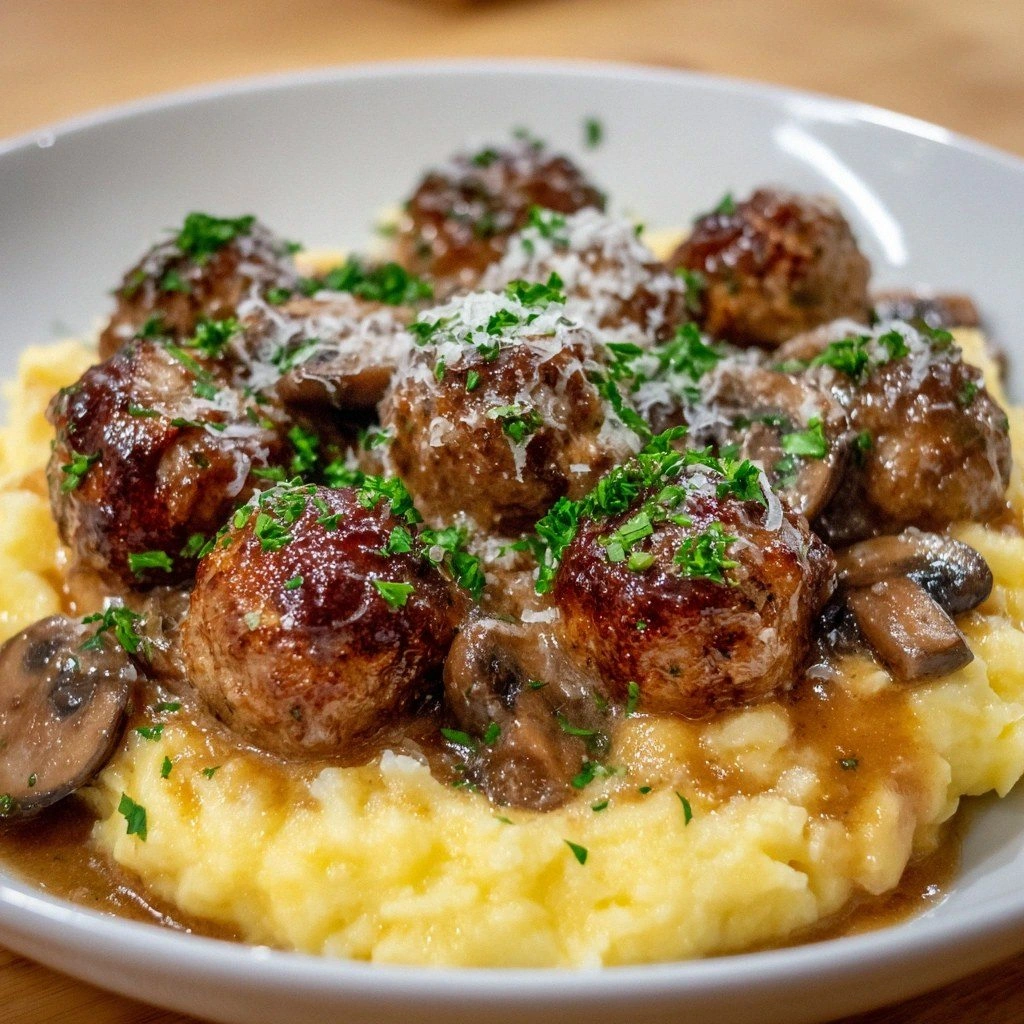
- Plate the meatballs in a shallow dish, pour the mushroom gravy over them, and serve immediately. Pair with creamy mashed potatoes, buttered noodles, or a simple green salad. The dish is best enjoyed hot, with the gravy still shimmering on the surface. If you’re serving a crowd, keep the meatballs warm in a low oven (200°F) while you finish the final sauce.
Insider Tricks for Flawless Results
The Temperature Rule Nobody Follows
Most cooks think that a high heat will make meatballs crispier, but the secret lies in medium‑low heat. Keeping the skillet at medium‑low allows the meatballs to release moisture slowly, ensuring they stay juicy. If you rush the process, the exterior will burn while the interior remains raw. I’ve tested this with a thermometer; the ideal internal temperature for the meatballs is 160°F.
Why Your Nose Knows Best
As the sauce simmers, your nose will give you early warnings. A faint, sweet aroma signals that the onions are caramelizing. If you notice a sharp, metallic scent, the wine might still be too raw. Trust your senses; the first time I followed this rule, my sauce was a hit, and my family never asked for a second plate.
The 5-Minute Rest That Changes Everything
After the meatballs finish simmering, let them rest on a wire rack for 5 minutes before serving. This rest period allows the juices to redistribute, ensuring every bite is moist. I’ve seen people skip this step, and the result is a dry center. Give yourself that brief pause, and your meatballs will feel like a hug.
The Secret to a Velvety Gravy
The roux you add at the end is key. Whisk the flour into butter over low heat until it turns a light golden color. This small step removes the raw flour taste and gives the gravy a silky texture. If you prefer a lighter sauce, replace half the flour with cornstarch; it will thicken without altering flavor.
How to Avoid a Gummy Texture
A gummy texture often results from over‑mixing the meatball mixture or using too much breadcrumb. Use just enough breadcrumbs to absorb the milk, and mix only until the ingredients are just combined. If you’ve ever tried a meatball that feels like rubber, you’ve likely mixed it too much.
The Final Touch: A Splash of Fresh Lemon
Just before serving, squeeze a small amount of fresh lemon juice over the dish. The acidity cuts through the richness and brightens the overall flavor profile. This tip is especially useful when serving the dish with creamy mashed potatoes, as it prevents the plate from feeling heavy.
Creative Twists and Variations
This recipe is a playground. Here are some of my favorite ways to switch things up:
Spicy Cajun Meatballs
Add a tablespoon of Cajun seasoning to the meat mixture and a dash of hot sauce to the gravy. The result is a bold, smoky flavor that pairs well with a side of corn‑bread.
Herb‑Infused Meatballs
Replace the parsley with a blend of fresh basil, oregano, and thyme. This herb combo gives the dish a Mediterranean twist, perfect for a summer dinner.
Creamy Parmesan Gravy
Stir in half a cup of grated Parmesan cheese at the end of simmering. The cheese melts into a rich, nutty sauce that’s irresistible when served over pasta.
Mushroom & Spinach Meatballs
Fold in a cup of fresh spinach into the meat mixture before forming the balls. The spinach adds color and a subtle earthiness that complements the mushroom gravy.
Low‑Carb Version
Swap the breadcrumbs for almond flour and use a sugar‑free tomato paste. The dish stays low‑carb while still delivering on flavor.
Vegetarian Alternative
Use a plant‑based ground meat substitute and replace beef broth with vegetable broth. The result is a hearty, meatball‑like dish that satisfies vegetarians.
Storing and Bringing It Back to Life
Fridge Storage
Cool the cooked meatballs and gravy to room temperature, then transfer them to an airtight container. Store in the refrigerator for up to 3 days. When ready to serve, reheat on the stovetop over low heat, stirring occasionally.
Freezer Friendly
For longer storage, place the meatballs in a freezer‑safe bag and freeze for up to 3 months. Thaw overnight in the refrigerator before reheating. The gravy can be frozen separately; just add a splash of broth when reheating to restore its silky texture.
Best Reheating Method
Reheat the dish over low heat, adding a splash of water or broth to keep it moist. Cover the pan to trap steam, ensuring the meatballs stay juicy. A quick stir every few minutes prevents the sauce from sticking to the bottom.