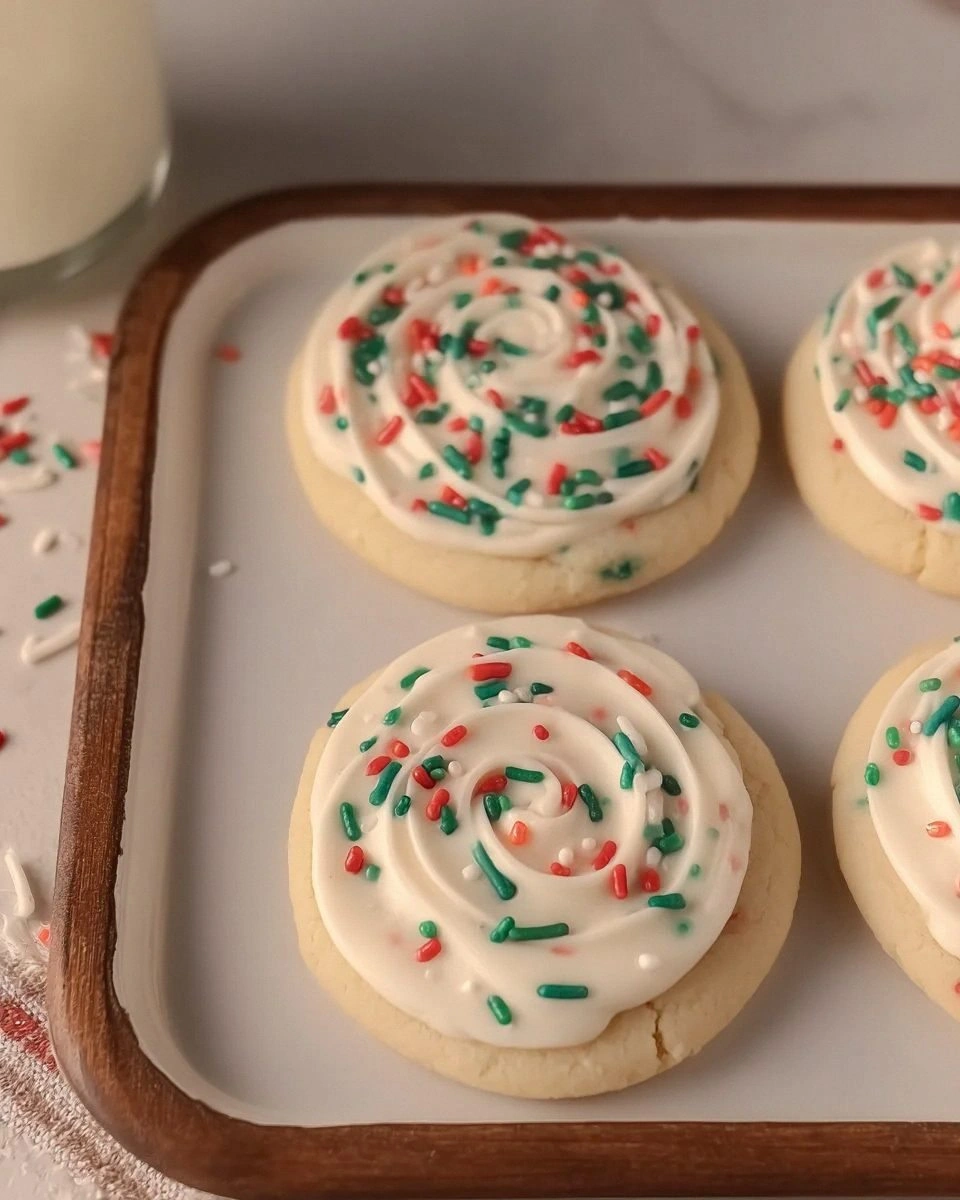
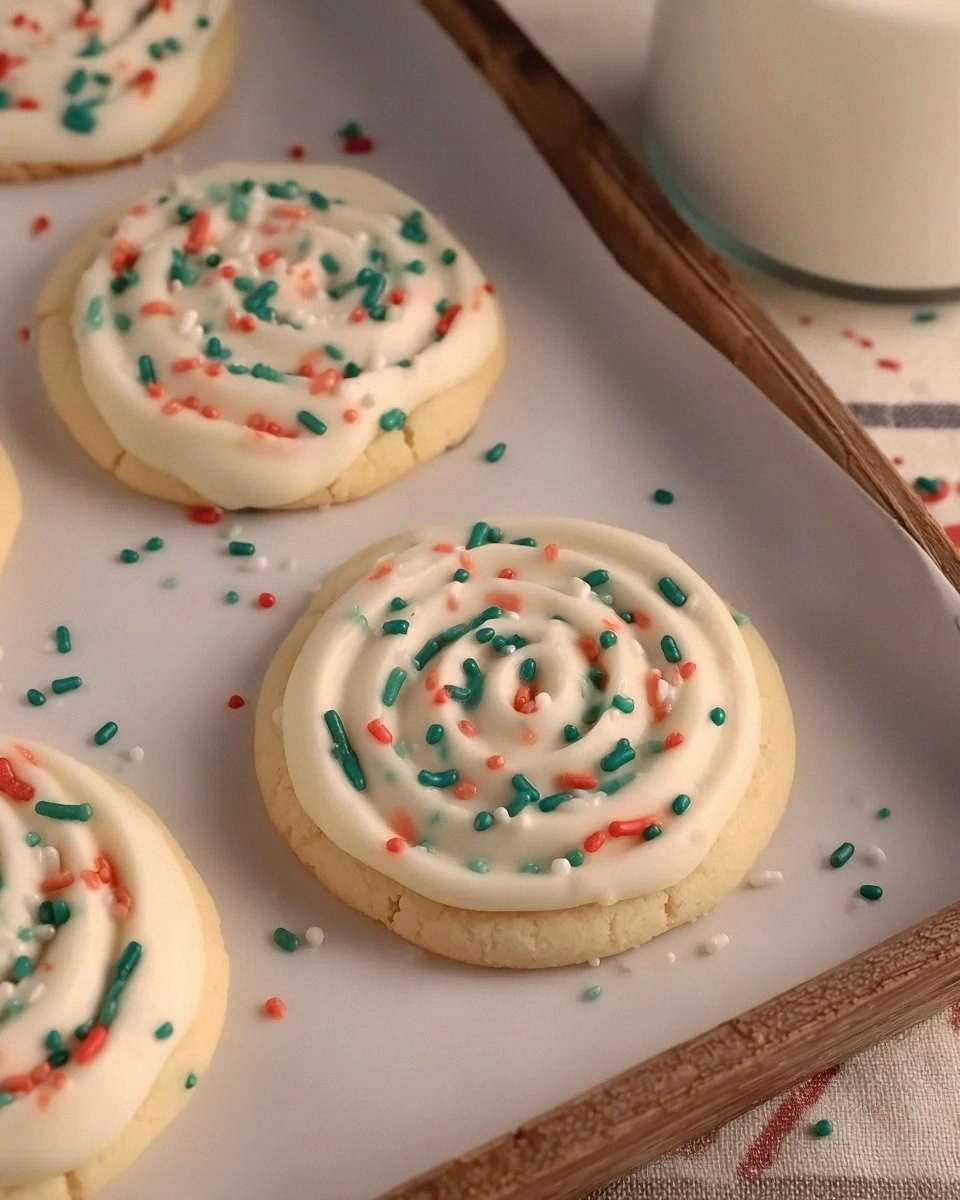
Last December, I set out to reverse-engineer the Crumbl Christmas Sugar Cookie that had my neighborhood in a frosting-fueled frenzy. What followed was three weeks, eleven pounds of butter, and a kitchen that looked like a snow globe exploded. I over-creamed, under-chilled, and—yes—once forgot the sugar entirely (pro tip: savory Christmas cookies are not a thing). But when the final batch emerged—edges blushing gold, centers pillow-soft, and that almond-vanilla perfume drifting through the house—my cookie-obsessed nephew took one bite, eyes widening like twinkle lights, and whispered, “You nailed it.” I dare you to taste these and not go back for seconds; I personally ate half the tray before the icing even set, standing over the sink in my reindeer pajamas, swearing I’d just sample “one more sliver.” This is hands down the best version you’ll ever make at home, and I’m spilling every secret so you can skip straight to the magic.
Picture yourself pulling these out of the oven: the kitchen windows fogged with buttery steam, cinnamon and almond extract swirling like a holiday symphony, and the soft thud of cookie bottoms landing on the cooling rack—music to any sugar-lover’s ears. The dough rolls like velvet between parchment sheets, the cutters glide without a hitch, and the frosting whips up so glossy you could check your reflection. Most recipes get this completely wrong—either the cookies spread into sad blobs or the frosting dries to a chalky shell. Here’s what actually works: a double chill, a whisper of cornstarch for cloud-soft tenderness, and a secret splash of heavy cream in the icing that keeps it supple for days. Stay with me here—this is worth it.
If you’ve ever struggled with sugar cookies that taste like sweet cardboard or icing that cracks like old paint, you’re not alone—and I’ve got the fix. We’re talking bakery-style thick cookies with that trademark Crumbl chew, a frosting that sets just enough to stack without smushing, and flavor so vibrant you’ll swear you’re standing inside the shop. Okay, ready for the game-changer? We’re browning half the butter for nutty depth, then chilling the dough in a tight cylinder so you can slice perfect rounds—no rolling pin wrestling required. Let me walk you through every single step—by the end, you’ll wonder how you ever made it any other way.
What Makes This Version Stand Out
- Chew Factor: A precise ratio of powdered sugar to granulated sugar plus cornstarch yields that signature Crumbl softness that bends before it snaps. Most recipes miss this and end up crisp like shortbread—delicious, but not the target.
- Flavor Whammy: Vanilla bean paste and almond extract create the nostalgic perfume that hits you the moment you peel back the box lid. One without the other tastes flat; together they sing carols.
- No-Spread Trick: Chilling the shaped cookies while the oven preheats locks the edges so your stars stay star-sharp and your trees don’t morph into lumpy clouds.
- Foolproof Frosting: A hybrid of buttercream and confectioners’ glaze sets smooth yet pillowy—pipeable peaks that won’t harden into cement, so every bite melts on your tongue.
- Make-Ahead Magic: Dough keeps four days in the fridge and two months in the freezer; baked bases stay tender under cling film for up to a week, so you can frost on demand when surprise guests drop by.
- One-Bowl Ease: Brown the butter in the same pot you melt it, scrape it straight into your stand mixer, and you’ve sidestepped extra dishes—because who needs more washing up during holiday chaos?
Alright, let’s break down exactly what goes into this masterpiece...
Inside the Ingredient List
The Flavor Base
Butter is the star soloist here—use a high-fat European-style (82 %) for deeper flavor and slower melt. Browning half of it concentrates nutty notes and evaporates water, so you get chewier centers without extra spread. Vanilla bean paste speckles the dough with those charming black freckles that say “homemade with swagger,” while pure almond extract walks the line between marzipan and cherry pit—just enough to intrigue, not overwhelm. Skip either extract and the cookies taste like grocery-store blanks; keep them both and neighbors will start “casually” dropping by.
The Texture Crew
Powdered sugar tenderizes by repelling gluten bonds, and a spoonful of cornstarch acts like culinary velvet, shortening strands so every bite feels like biting into a cloud wearing a sweater. Granulated sugar provides crisp edges for contrast—think brownie edges but cookie-style. One whole egg plus an extra yolk add fat for richness and lecithin for structure, while cream cheese in the frosting lends a subtle tang that balances all that sweetness. If you swap in margarine, you’ll lose the browning notes and the snap; trust me, I tried during a “healthy” phase and the results tasted like regret.
The Unexpected Star
A mere quarter teaspoon of kosher salt amplifies every other flavor without veering into savory territory. It’s the difference between a flat high note and a full chord progression. Similarly, a dash of lemon juice in the icing brightens the almond and keeps the sweetness from cloying. You won’t taste citrus; you’ll just notice the frosting tastes fresher, like cold milk after a mouthful of candy. Leave it out and you’ll wonder why your cookies don’t have that bakery sparkle.
The Final Flourish
Use unbleached all-purpose flour with a moderate protein content (around 10.5 %) for enough structure to hold shape yet still stay tender. Bread flour turns them into hockey pucks; cake flour makes them crumble like sandcastles. For the garnish, festive nonpareils add crunch and nostalgic color, but dragée pearls give you that Crumbl-worthy crunch. Buy them in the ice-cream topping aisle; they’re cheaper than the specialty store and twice as shiny.
Everything’s prepped? Good. Let’s get into the real action...
The Method — Step by Step
- Brown half the butter: melt 1 stick in a stainless pot over medium, swirling occasionally until the milk solids turn amber and smell like toasted hazelnuts. Immediately scrape into a heat-proof bowl and chill until semi-solid, about 25 minutes. This step concentrates flavor and removes excess water, giving you that bakery chew. The sizzle when it hits the cold bowl? Absolute perfection.
- Cream the fats and sugars: in a stand mixer, beat the cooled brown butter, remaining stick of softened butter, granulated sugar, and powdered sugar on medium-high for 3 full minutes. You’re aerating the mixture, trapping tiny pockets that expand in the oven for lift. The color should lighten like cafe au lait and the texture will look whipped—don’t rush this; time equals tenderness.
- Add egg magic: crack in the whole egg, then the yolk, letting each incorporate fully before the next. Splash in vanilla bean paste and almond extract. The batter will look satiny and smell like holiday perfume. If you see curdled bits, bump the speed for 10 seconds; they’ll smooth right out.
- Whisk dry ingredients: in a separate bowl, whisk flour, cornstarch, baking powder, and salt. Aerating prevents the dense streaks that ruin texture. Fun fact: cornstarch is a classic bakery trick for melt-in-your-mouth short cookies—think Chinese bakery pineapple buns or Mexican wedding cookies.
- Bring it together: reduce mixer to low and add dry mix in three additions, pausing to scrape the bowl. Stop the instant the last flour streaks disappear; over-mixing develops gluten and you’ll lose the delicate crumb. The dough will feel soft, not sticky—like Play-Dh that’s been sitting in the box overnight.
- Shape and chill: scrape dough onto parchment, pat into a 1-inch rectangle, top with another sheet, and roll to an even ½-inch slab. Slide onto a baking sheet and refrigerate 45 minutes. Cold butter equals sharp edges and zero spread. If you’re impatient, 20 minutes in the freezer works too.
- Cut and freeze: peel off top parchment, dip cutters in flour, punch out shapes, and transfer to a parchment-lined sheet. Gather scraps, reroll once—more than that equals tough cookies—and freeze cut shapes 15 minutes while the oven preheats to 350 °F. This next part? Pure magic.
- Bake to perfection: slide cookies into the center rack and bake 10–12 minutes. Look for matte centers and barely-golden edges; they’ll finish cooking on the sheet. That gentle wobble when you nudge a tree’s tip means you nailed the soft center. Over-baking is the rookie mistake that turns them into crackers.
- Cool smart: let cookies rest on the sheet 5 minutes—any longer and bottoms sweat, any sooner and they’ll crumble. Transfer to a wire rack with an offset spatula. Your kitchen will smell like you’re living inside a vanilla candle and the neighbors may start caroling at your door.
That’s it—you did it. But hold on, I’ve got a few more tricks that’ll take this to another level...
Insider Tricks for Flawless Results
The Temperature Rule Nobody Follows
Ingredients should feel like a mild spring day: butter soft enough to dent with a finger but not greasy, eggs at room temp so they emulsify without curdling, and flour that’s not icy from the pantry. Cold eggs shock the butter into chunky bits, creating pockets that melt and crater in the oven. Leave them on the counter for 30 minutes or submerge in lukewarm water for 10. Your dough will come together like silk and bake evenly from edge to center.
Why Your Nose Knows Best
When browning butter, ignore the timer and trust aroma—nutty, toasty, almost like caramel corn. The visual cue is sandy brown flecks at the bottom, but smell is the true finish line. A friend tried skipping this step once—let’s just say her cookies tasted like margarine-scented regret. Keep a small plate in the freezer; a dab of browned butter on it cools instantly so you can taste the depth without burning your tongue.
The 5-Minute Rest That Changes Everything
After mixing, let the dough rest 5 minutes before rolling. Hydration evens out, flour granules swell, and the stickiness subsides so you use less bench flour, which can dry edges. It’s like letting steak rest after grilling—patience equals juiciness. Cover the bowl with a tea towel so it doesn’t crust over, and use the pause to rinse the dishes; you’ll thank yourself later when counters are clear for cutting.
Freeze, Don’t Flour
Instead of dusting cutters with flour (which leaves pasty edges), dip them in powdered sugar or freeze the dough slab first. Cold dough releases cleanly, keeps sharp corners, and you avoid that chalky buildup that mutes detail. Between cuts, swipe the cutter on a paper towel spritzed with water for picture-perfect trees and stars every time.
Creative Twists and Variations
This recipe is a playground. Here are some of my favorite ways to switch things up:
Cocoa Peppermint Bark
Replace ¼ cup flour with Dutch-process cocoa and add ½ tsp peppermint extract to the dough. Top frosted cookies with crushed candy canes for a red-and-black speckled look that tastes like December in Vermont. The bitterness of the cocoa balances the sweet icing, making them dangerously snackable.
Lemon Poppy Snowflakes
Swap almond extract for lemon oil and fold 1 Tbsp poppy seeds into the dough. Finish with a lemon juice glaze instead of buttercream for a bright, crisp cookie that cuts through the richness of holiday desserts. Perfect for the friend who claims they “don’t like sweets.”
Hot Cocoa Hot Chocolate
Add a packet of instant hot cocoa mix and mini dehydrated marshmallows to the dough. The marshmallows melt into gooey pockets, and the cocoa mix gives malted depth. Drizzle with chocolate ganache and a shower of micro-planed chocolate for Instagram-worthy glamour.
Spiced Chai Stars
Whisk 1 tsp each of cardamom, cinnamon, and ginger into the flour. Brown sugar instead of granulated adds molasses notes that pair with a maple-cream cheese frosting. Your kitchen will smell like a cozy tea shop, and the cookies pair outrageously well with black coffee on Christmas morning.
Cranberry Orange Shortbread
Fold in chopped dried cranberries and orange zest, then shape into logs, chill, and slice rounds for effortless elegance. Dip half in white chocolate and sprinkle with pistachio dust for bakery-window appeal. These travel like champs in cookie tins and taste better after a day of flavor mingling.
Salted Caramel Thumbprints
Roll dough balls, press a thumbprint, and fill with a caramel candy half-way through baking. Finish with flaky sea salt on the frosting for that sweet-salty pop that keeps everyone reaching. Keep napkins handy; the caramel stays molten for hours.
Storing and Bringing It Back to Life
Fridge Storage
Layer completely cooled cookies in an airtight container with parchment between stacks; they’ll stay pillow-soft for five days. Add a slice of sandwich bread to absorb excess moisture and prevent the dreaded icing crust. Keep them away from strong-smelling foods like onion dip—cookies are fragrance sponges.
Freezer Friendly
Flash-freeze unfrosted bases on a sheet until solid, then pile into a zip bag with as much air removed as possible. They’ll keep two months without freezer burn. Frost while still frozen; the icing sets faster and you won’t crush tender edges. For already-frosted cookies, freeze on a sheet first, then wrap individually in plastic so the ruffles stay perfect.
Best Reheating Method
Room temp is ideal, but if you like that fresh-baked warmth, pop cookies in a 300 °F oven for 3 minutes—no longer or the frosting will slide off like a sled on a sunny hill. Add a tiny splash of water to the baking sheet first; it steams them back to bakery softness without drying edges.