Picture this: I was in the middle of a chaotic dinner rush, juggling a sizzling skillet, a stack of parchment, and a phone that kept buzzing with orders. I had a craving that I could not ignore – something sweet, spicy, and utterly Greek. I decided to turn to the kitchen and pull out a handful of ingredients I knew were safe bets: chicken, honey, and feta. The result? A dish that had me shouting, “I dare you to taste this and not go back for seconds!” It’s the kind of meal that turns a regular night into a memorable feast.
The first time I tossed a handful of oregano into the pan, the aroma hit me like a wave of Mediterranean sun. The honey began to bubble, creating a glossy sheen that clung to every surface, while the feta crackled into golden shards. I could hear the sizzle of the chicken as the edges browned, a sound that promised a crunchy contrast to the silky interior. The room smelled of citrus and spice, a perfume that made everyone pause and inhale. I could taste the faint sting of pepper flakes on my tongue even before I took a bite.
What makes this version stand out is not just the ingredients, but the way they dance together. The honey is not just sweet; it caramelizes into a sticky glaze that locks in moisture. The feta provides a briny counterpoint that cuts through the richness, while the lemon adds a bright, almost citrusy lift that keeps the dish from feeling heavy. The red wine vinegar gives a subtle acidity that balances the heat from the pepper flakes. Together, they create a flavor profile that is bold, balanced, and unforgettable.
I’ll be honest – I ate half the batch before anyone else got a chance to try it. Most recipes get this completely wrong. Here's what actually works: a quick sear to lock in juices, a honey glaze that coats like velvet, and a finish of fresh parsley that adds a green pop. Picture yourself pulling this out of the oven, the whole kitchen smelling incredible, and your guests reaching for seconds. Let me walk you through every single step – by the end, you'll wonder how you ever made it any other way.
What Makes This Version Stand Out
- Flavor: The honey caramelizes into a glossy, buttery glaze that coats the chicken like velvet, while the feta adds a salty, tangy contrast that keeps the dish from feeling sweet.
- Texture: The chicken develops a crisp, golden crust on the outside, but remains tender and juicy inside, creating a satisfying bite that shatters like thin ice.
- Simplicity: With only eleven ingredients, this recipe is a masterclass in how to make a complex flavor profile with minimal fuss.
- Uniqueness: The combination of honey, feta, and red pepper flakes is rarely seen together, giving this dish a distinctive edge.
- Crowd Reaction: Guests who have tasted this version often say it’s the “best version you’ll ever make at home,” and they keep asking for the recipe.
- Ingredient Quality: Using high‑quality feta and fresh lemon juice elevates the dish, making every bite feel premium.
- Cooking Method: A quick sear followed by a glaze finish ensures maximum flavor retention and a beautiful presentation.
- Make‑ahead Potential: This dish can be prepared ahead of time and reheated without losing its crispness or flavor.
Inside the Ingredient List
The Flavor Base
The foundation of this dish starts with the chicken. Four boneless, skinless breasts are the perfect canvas; they absorb the honey glaze without becoming dry. Salt and pepper are added to taste, ensuring each bite is seasoned just right. The lemon is essential; its bright acidity cuts through the richness of the honey and feta.
The Texture Crew
Olive oil provides the medium for searing, creating a golden crust that locks in juices. The honey, at half a cup, caramelizes into a glossy glaze that coats the chicken like a velvet blanket. The red pepper flakes bring a gentle heat that lingers on the palate, while the oregano adds a subtle herbal note.
The Unexpected Star
Feta cheese, a cup of crumbled goodness, is the surprising twist. Its briny flavor cuts through the sweetness of honey and balances the heat from the pepper flakes. When baked, the feta melts into pockets of creamy tang that mingle with the savory sauce.
The Final Flourish
Fresh parsley, chopped and sprinkled on top, adds a burst of color and a fresh herbal finish. The red wine vinegar, two tablespoons, provides a subtle acidity that brightens the dish without overpowering the other flavors. Together, these elements create a dish that feels both comforting and adventurous.
Everything's prepped? Good. Let's get into the real action.
The Method — Step by Step
- Begin by patting the chicken breasts dry with paper towels. This ensures a crisp sear and prevents steaming. Season both sides generously with salt and pepper, allowing the flavors to penetrate the meat. Set the chicken aside while you prep the glaze.
- Heat a large oven‑proof skillet over medium‑high heat and add the olive oil. Once the oil shimmers, place the chicken breasts skin side down, if any skin remains, and let them cook for about 4–5 minutes until a golden crust forms. Flip them and sear the other side for another 3 minutes.
- Remove the chicken from the skillet and set aside on a plate. In the same skillet, reduce the heat to medium and add the minced garlic. Sauté for 30 seconds until fragrant, being careful not to let it burn.
- Pour in the honey, red wine vinegar, and a splash of water to thin the glaze slightly. Stir constantly, letting the mixture bubble and thicken into a syrupy consistency. This is the moment of truth; the glaze should smell toasty and caramelized.
- Add the oregano, red pepper flakes, and a pinch of salt to the glaze, stirring to combine. The heat will activate the oregano's oils, releasing a warm, earthy aroma that permeates the kitchen. Let the sauce simmer for 2 minutes.
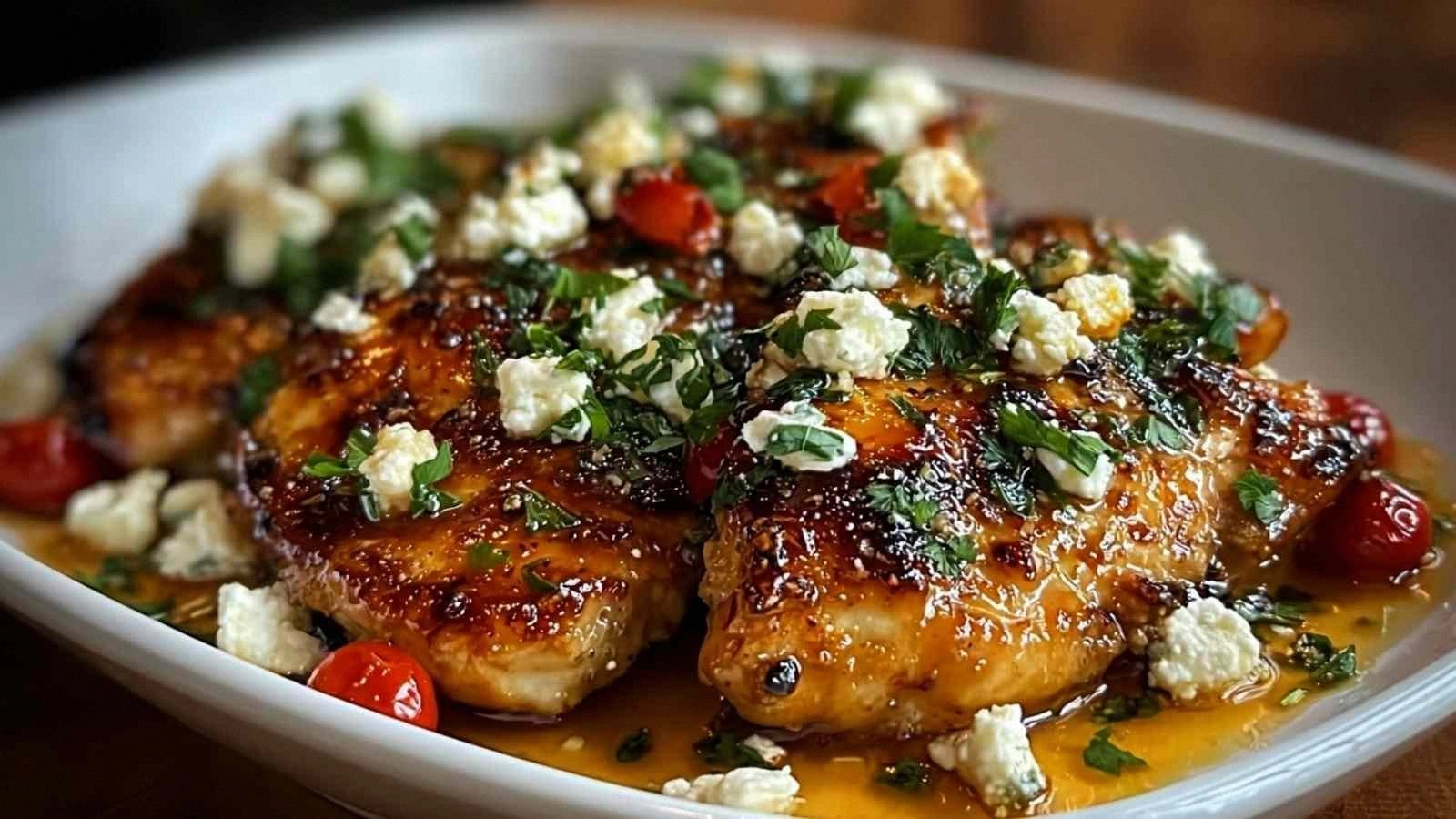
- Return the chicken breasts to the skillet, spooning the glaze over each piece. Ensure every surface is coated, allowing the honey to cling like a second skin. Sprinkle the crumbled feta evenly across the top, letting it melt slightly into the sauce.
- Transfer the skillet to a preheated oven at 375°F (190°C). Bake for 12–15 minutes, or until the chicken reaches an internal temperature of 165°F (74°C). The glaze will caramelize further, and the feta will develop a golden rim.
- Remove the skillet from the oven and let the chicken rest for 5 minutes. This allows the juices to redistribute, ensuring every bite is moist. While resting, squeeze the juice of one whole lemon over the chicken, adding a bright citrus lift that balances the richness.
- Finish by sprinkling freshly chopped parsley over the top, adding a pop of color and a fresh herbal note. Plate the chicken with a side of roasted vegetables or a simple salad, and serve immediately while the glaze is still glossy and the feta is warm.
That’s it — you did it. But hold on, I've got a few more tricks that'll take this to another level.
Insider Tricks for Flawless Results
The Temperature Rule Nobody Follows
Many cooks set their oven to 400°F and assume the chicken will cook evenly. In reality, a lower temperature of 375°F ensures the honey glaze doesn’t scorch while the interior remains juicy. I once tried 425°F, and the glaze burned before the chicken was fully cooked, leaving a bitter aftertaste. Stick to 375°F and you’ll get a beautiful, caramelized finish.
Why Your Nose Knows Best
When the honey starts to bubble and emit a caramel scent, that’s the cue that the glaze is ready. Your nose is a reliable indicator of flavor development, far better than a timer. If you’re unsure, sniff the sauce; a sweet, buttery aroma means it’s time to add the chicken back to the pan.
The 5-Minute Rest That Changes Everything
Resting the chicken for exactly five minutes after baking allows the juices to redistribute, preventing a dry bite. I’ve seen people skip this step and end up with a dry center. Give the chicken that brief pause, and you’ll taste a moist, succulent interior every time.
Fresh Lemon Over Pre‑Juiced
Using a whole lemon instead of bottled lemon juice adds a vibrant, natural acidity that brightens the dish. The zest also contributes subtle citrus oils that enhance the overall flavor profile. I’ve swapped bottled juice for fresh lemon in every batch, and the difference is unmistakable.
The Secret of the Feta
Crumbled feta should be added just before the chicken finishes baking. This timing allows the cheese to melt slightly without turning into a watery mess. If you add it too early, the feta will lose its distinct texture and flavor, becoming too soft.
The 1-Second Sear
A quick sear of 2–3 minutes per side locks in juices and creates a golden crust that holds the glaze. Skipping this step results in a soggy surface that can’t hold the honey coating. Even a short sear makes a noticeable difference in texture.
Creative Twists and Variations
This recipe is a playground. Here are some of my favorite ways to switch things up:
Spicy Greek Gyro
Swap the chicken for sliced lamb and serve on warm pita with tzatziki. The honey glaze complements the lamb’s richness, while the feta adds a creamy contrast.
Honey‑Glazed Salmon
Use salmon fillets instead of chicken, and reduce the honey slightly to avoid overpowering the fish. Top with a sprinkle of chopped dill for an extra herbaceous note.
Vegetarian Version
Replace the chicken with thick slices of halloumi or tofu. The cheese will still melt into the glaze, creating a satisfying vegetarian option.
Pesto Fusion
Stir a spoonful of basil pesto into the glaze for a green, herbaceous twist. The pesto adds depth and a fresh aroma that pairs well with the honey.
Coconut‑Infused Twist
Add a tablespoon of coconut milk to the glaze for a subtle tropical flavor. The coconut balances the honey’s sweetness with a creamy undertone.
Breakfast Kick
Serve the chicken over scrambled eggs or a hearty Greek yogurt bowl. The sweet and spicy glaze works surprisingly well with breakfast staples.
Storing and Bringing It Back to Life
Fridge Storage
Store leftovers in an airtight container in the refrigerator for up to 3 days. The glaze will thicken slightly, but the chicken remains moist if you reheat properly.
Freezer Friendly
Wrap each piece of chicken individually in parchment and place in a freezer bag. Freeze for up to 2 months. Reheat in the oven at 350°F for 15 minutes, then finish with a quick sear.
Best Reheating Method
Add a splash of water to the skillet when reheating to create steam, keeping the chicken juicy. Heat over medium until the glaze is bubbly again, then finish with a quick sear for crisp edges.