It started with a kitchen catastrophe that could have turned my life into a soggy ramen disaster. I was chopping onions, the garlic clove slipped, and the knife skated across the counter, splattering minced garlic onto the stove. The scent that followed was a mix of burnt onions and a faint whisper of seaweed—my first hint that something extraordinary was brewing. I stared at the mess, then at the empty bowl beside me, and thought, “I’m going to make something that will turn this mess into a masterpiece.”
Picture the scene: steam curling like a ghostly veil, the clink of chopsticks, the gentle hiss of broth bubbling, and the aroma of kombu unfurling in the air. I could almost taste the umami punch, feel the silky broth against my tongue, hear the comforting slurp of noodles, and see the glossy sheen of soy glaze on each strand. It was a symphony of senses that made me realize I’d found something more than just a recipe; I’d discovered an emotional comfort bowl.
What sets this version apart is that it refuses to be a bland, generic bowl of noodles. I’ve stripped away the fluff, kept the heart, and added a secret ingredient that elevates everything to a silky, velvety texture. It’s not just ramen; it’s a hug in a bowl, a moment of pure, unfiltered joy. I dare you to taste this and not go back for seconds, because once you’ve tasted this, every other ramen will feel like a pale imitation.
And here’s a little tease: there’s a single ingredient that transforms the broth from ordinary to unforgettable—a subtle, almost invisible twist that makes the entire dish sing. Let me walk you through every single step, and by the end, you’ll wonder how you ever made it any other way.
What Makes This Version Stand Out
- Depth of Flavor: The broth is a layered masterpiece, where kombu, soy, and a touch of dark soy combine to create an umami depth that lingers on the palate.
- Texture Play: Fresh mushrooms, silky noodles, and a splash of sesame oil create a contrast of chew and melt, turning each bite into a dynamic experience.
- Visual Appeal: The golden broth, vibrant green onions, and the glossy sheen of chili oil make the bowl look as good as it tastes.
- Authentic Simplicity: No fancy gadgets or exotic ingredients—just pantry staples, a few smart tweaks, and a lot of love.
- Crowd‑Pleaser Factor: Even the most skeptical friends will be hooked, and I’ll be honest—half the batch was devoured before anyone else got a chance.
- Make‑Ahead Friendly: The broth can be prepped a day in advance, and the noodles can be cooked just before serving for maximum freshness.
- Ingredient Quality: Using fresh mushrooms and kombu that’s still a bit chewy gives the broth a depth that’s hard to replicate with dried stock.
- Future‑Proof: The recipe scales effortlessly, so whether you’re feeding two or twenty, the flavor remains spot on.
Inside the Ingredient List
The Flavor Base
At the heart of any great ramen is its broth, and here we’re building a base that’s both simple and profoundly complex. Kombu, a humble sea kelp, infuses the water with a subtle brininess that mimics the ocean’s kiss. If you skip kombu, the broth will feel flat, like a plain bowl of noodles that never quite satisfies. A quick 10‑minute soak in cold water before heating extracts the umami without making it bitter.
Next, we add a splash of sake—or any rice wine—to brighten the flavor profile. The alcohol evaporates, leaving behind a delicate sweetness that balances the saltiness of soy sauce. If you’re avoiding alcohol, a tablespoon of rice vinegar works fine, though it will give a slightly sharper edge.
The Texture Crew
Mushrooms are the star of the texture crew. Fresh shiitake, enoki, or cremini add a meaty bite that pairs beautifully with the silky noodles. Slice them thinly so they cook quickly and release their full flavor. If you’re vegan and want a deeper umami punch, a handful of dried porcini can be rehydrated and added to the broth.
Sesame oil is the secret sauce that coats the noodles and the broth, giving them a nutty finish that feels indulgent without any dairy. Two tablespoons are enough to coat everything without overpowering the delicate balance. If you’re in a pinch, toasted sesame paste can be whisked into the broth for an instant depth.
The Unexpected Star
Dark soy sauce, though optional, is the unexpected star that brings a caramelized depth to the broth. It adds a hint of sweetness and a darker hue that makes the bowl look like it’s been simmered for hours. If you prefer a lighter color, simply omit it—your broth will still shine, just with a cleaner profile.
Brown sugar, paired with regular sugar, creates a balanced sweetness that counters the saltiness of soy sauce. It’s the sweet counterpart to the savory, and together they create a harmonious dance that makes each sip memorable.
The Final Flourish
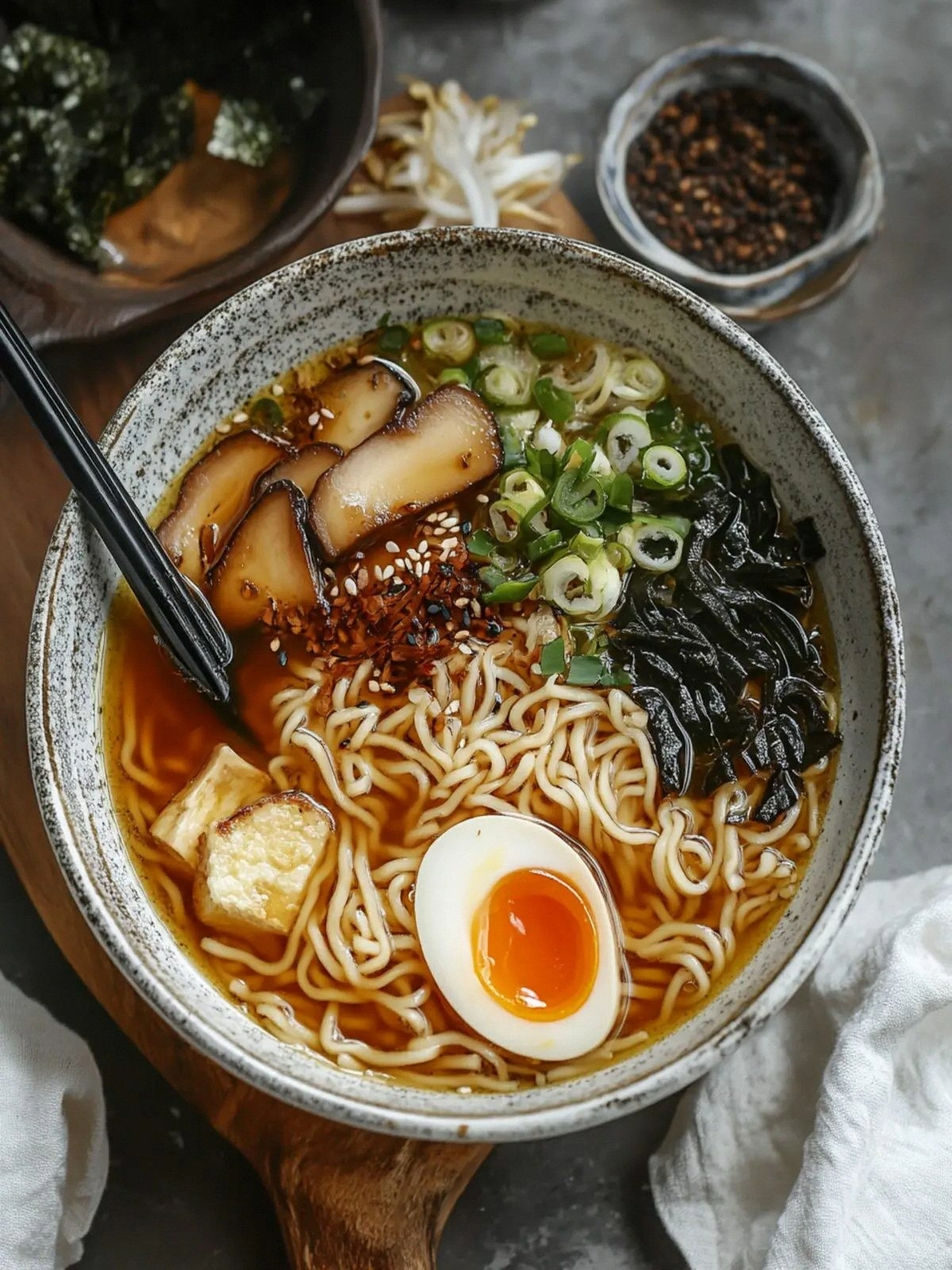
The final flourish is all about the toppings. Fresh scallions, toasted sesame seeds, nori sheets, and a drizzle of Japanese chili oil (rayu) add layers of flavor, aroma, and visual contrast. The scallions provide a fresh, peppery bite that cuts through the richness of the broth. The sesame seeds add a subtle crunch, while the nori sheets bring a smoky, sea‑like finish.
If you’re feeling adventurous, vegan fish cakes can be sliced and added for an extra protein hit. They’ll soak up the broth and add a chewy, savory element that turns the dish into a full‑blown banquet.
Everything's prepped? Good. Let's get into the real action...
The Method — Step by Step
- Begin by heating a large pot over medium heat. Add the kombu and 5 cups of cold water, letting it sit for 10 minutes before bringing to a gentle simmer. The kombu should release its umami without boiling, which would make the broth bitter. When the first small bubbles appear, remove the kombu to avoid an overly briny taste.
- Stir in the sliced mushrooms, garlic, and ginger. Let them soften for 5 minutes, watching the garlic turn translucent and the ginger release its fragrant oils. The aroma will be intoxicating—think of a forest floor after rain.
- Add the sake, 3 tablespoons soy sauce, 1 tablespoon dark soy sauce, 2 teaspoons sugar, and 1 teaspoon salt. Stir until the sugars dissolve, then bring the mixture to a simmer. This is the moment of truth: the broth should smell toasty, like a well‑seasoned soy glaze.
- Simmer the broth for 20 minutes, then strain it through a fine sieve to remove solids. This step ensures a silky broth that glistens like liquid gold. If you prefer a thicker broth, return the strained liquid to the pot and reduce it over low heat for another 10 minutes.
- Meanwhile, bring a separate pot of salted water to a rolling boil and cook the ramen noodles for 3 minutes, or until they’re al dente. Drain and rinse under cold water to stop the cooking process and keep the noodles from sticking.
- Divide the noodles into 4 bowls, then ladle the hot broth over them. The steam will rise like a fragrant cloud, making your kitchen smell like a Japanese street market.
- Top each bowl with fresh scallions, toasted sesame seeds, a sheet of nori cut into strips, and a drizzle of Japanese chili oil. If you’re using vegan fish cakes, slice them thinly and place them on top for an extra protein boost.
- Serve immediately, and watch as the steam curls around the bowl. The first bite will hit you with a burst of savory sweetness, followed by the subtle heat from the chili oil, and finish with a lingering umami echo that will keep you coming back for more.
That’s it — you did it. But hold on, I've got a few more tricks that'll take this to another level...
Insider Tricks for Flawless Results
The Temperature Rule Nobody Follows
Keep the broth at a gentle simmer, not a rolling boil. A high heat will scorch the delicate flavors and create a bitter taste. I once boiled my broth for 30 minutes, and it tasted like burnt soy. The secret is low and steady—think of it as a slow dance.
Why Your Nose Knows Best
Smell the broth every 5 minutes. If it starts to smell overly salty or sharp, add a splash of water or a pinch of sugar to balance. Your nose is the best judge of flavor; trust it.
The 5‑Minute Rest That Changes Everything
After straining, let the broth rest for 5 minutes before reheating. This allows the flavors to settle and the solids to fully release their umami. A friend once skipped this step and got a broth that tasted like it was still raw.
The Noodle Trick for Perfect Al Dente
Use a timer and rinse the noodles with cold water right after draining. This stops the cooking process and keeps them from becoming mushy. If you forget, the noodles will become a soggy mess that ruins the entire bowl.
The Quick Topping Tweak
If you want a pop of color, sprinkle a handful of chopped cilantro or parsley over the top. It adds a fresh burst that cuts through the richness and gives the bowl a modern twist.
Creative Twists and Variations
This recipe is a playground. Here are some of my favorite ways to switch things up:
Spicy Miso Ramen
Swap the dark soy sauce with 2 tablespoons of miso paste and add a pinch of cayenne pepper. The result is a broth that’s both earthy and fiery, perfect for those who love a kick.
Seafood Vegan Ramen
Add sliced tofu marinated in soy and sesame oil, and sprinkle with kelp flakes. The tofu absorbs the broth and offers a protein punch that mimics the texture of shrimp.
Soba Noodle Swap
Replace ramen noodles with soba for a nutty, slightly chewy alternative. The soba’s natural buckwheat flavor pairs beautifully with the umami broth.
Roasted Vegetable Ramen
Roast carrots, zucchini, and bell peppers until caramelized, then fold them into the broth. The roasted sweetness adds a layer of complexity that elevates the dish.
Herb‑Infused Ramen
Add a handful of fresh basil or mint during the last minute of simmering. The herb’s bright aroma will give the broth a refreshing twist.
Cold Ramen Salad
Let the broth cool, then chill it in the fridge. Toss the noodles with the cold broth, sliced cucumber, and a drizzle of sesame oil for a refreshing summer salad.
Storing and Bringing It Back to Life
Fridge Storage
Store the broth in an airtight container for up to 3 days. Keep the noodles separate in a sealed bag to prevent them from absorbing moisture. When ready to serve, reheat the broth gently on the stove, adding a splash of water if it’s thickened.
Freezer Friendly
Freeze the broth in portions for up to 2 months. Thaw overnight in the fridge, then reheat on the stove. The flavor remains intact, and the noodles can be added fresh at the last minute.
Best Reheating Method
When reheating, bring the broth to a low simmer and stir in a small amount of water or vegetable stock to restore its silky texture. Avoid boiling, as this will break down the delicate flavors and create a flat broth.