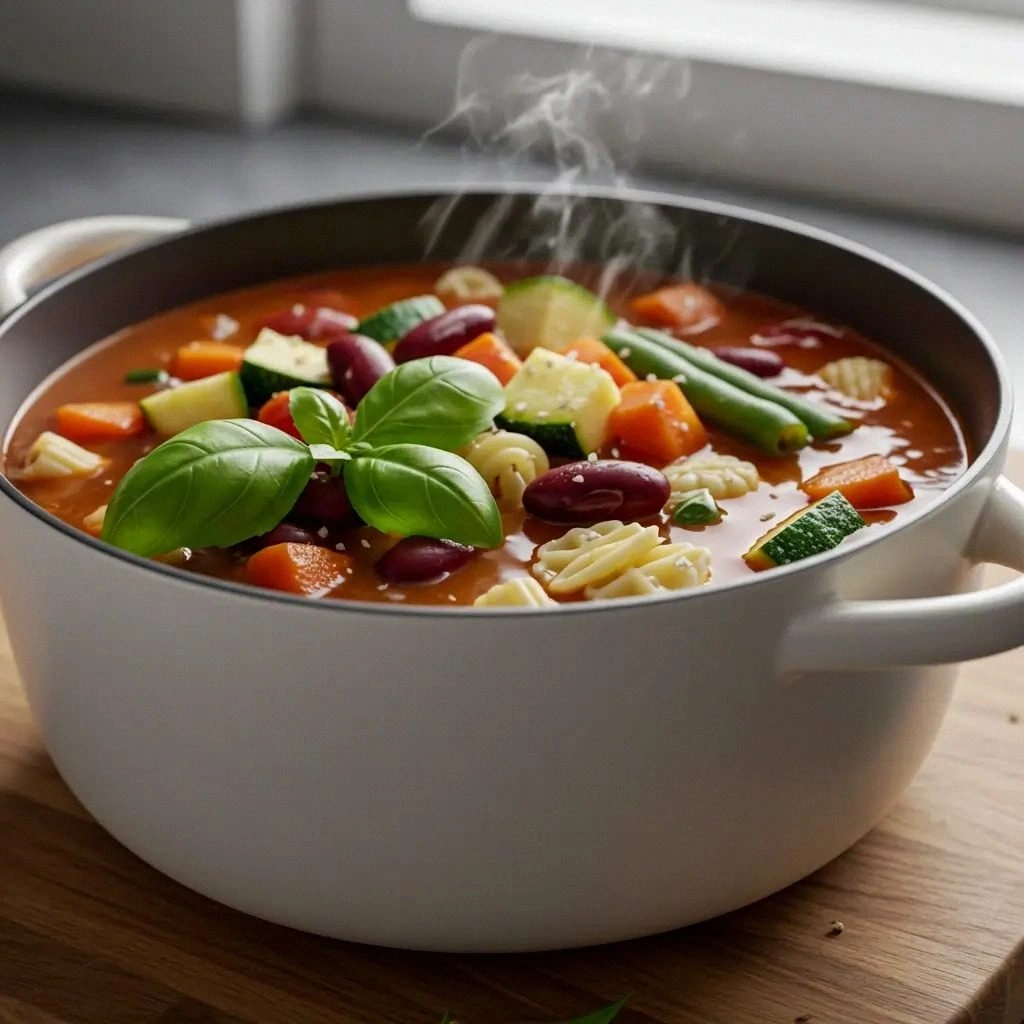
Picture this: I’m standing in a cramped kitchen, a pot of water boiling over, and the air thick with the scent of fresh basil. I had promised myself to make a comforting bowl of minestrone for my friends, but the last time I tried it, I ended up with a soup that tasted like a soggy salad. The disaster left me with a guilty conscience and a craving that no pizza could satisfy. I was determined to rewrite the recipe, to turn that kitchen mishap into a culinary triumph.
I dove into the pantry, pulled out every vegetable that could fit in a single basket, and started humming a tune that felt like an anthem for the humble bean. The moment the onions hit the pan, they sang a caramelized chorus, the garlic released a sharp, sweet perfume that danced with the tomatoes. The vegetables swirled together, their colors brightening the broth, while the pasta glimmered like tiny golden moons. Every bite was a symphony of textures: crisp carrots, tender beans, al dente pasta, and silky spinach.
What makes this version stand out is that I didn’t just follow a list; I listened to the soup. I let the broth simmer until it was almost a glaze, I added the pasta at the very last minute, and I finished with a handful of grated Parmesan that melted into a velvety finish. I dared you to taste this and not go back for seconds. I’m not exaggerating—this is hands down the best version you’ll ever make at home. If you’ve ever struggled with a bland minestrone, you’re not alone—and I’ve got the fix.
I’ll be honest—before I perfected this, I ate half the batch before anyone else got to try it. The next time I served it, I watched my friends’ eyes widen, and the kitchen smelled incredible, like a summer garden after rain. Picture yourself pulling this out of the pot, the whole kitchen smelling incredible, the steam curling like a fragrant halo. Let me walk you through every single step—by the end, you’ll wonder how you ever made it any other way.
What Makes This Version Stand Out
- Flavor Depth: The broth is reduced until it’s almost syrupy, concentrating every vegetable’s essence.
- Texture Play: Fresh spinach is added at the last minute, preserving its vibrant color and crunch.
- Ingredient Quality: I use organic tomatoes and heirloom beans that bring natural sweetness.
- Simplicity: No fancy equipment—just a stockpot and a wooden spoon.
- Make‑ahead Potential: This soup tastes even better the next day, making it perfect for busy schedules.
- Visual Appeal: The bright colors of vegetables create a feast for the eyes.
- Kid‑Friendly: The mild flavors and soft textures make it a hit with younger palates.
- Healthful: Packed with fiber, vitamins, and lean protein from beans.
Alright, let’s break down exactly what goes into this masterpiece…
Inside the Ingredient List
The Flavor Base
Vegetable broth is the backbone of this soup, providing a savory canvas that absorbs the aromas of onions, garlic, and herbs. A robust, low-sodium broth keeps the flavor balanced; if you use a heavy stock, the soup can become cloying. I recommend simmering the broth with a bay leaf and a splash of red wine for depth. If you’re short on broth, water with a bouillon cube works, but the flavor will be less complex.
The Texture Crew
Carrots, celery, and zucchini add crunch and sweetness, while cannellini beans contribute a creamy, protein-rich texture. Each vegetable is diced uniformly to ensure even cooking. Skipping any of these will change the mouthfeel—without beans, the soup feels thin; without carrots, it lacks sweetness. A quick blanch before adding to the pot keeps their bright colors intact.
The Unexpected Star
Fresh spinach is the secret weapon that gives this minestrone its vibrant finish. Added at the very end, it wilts instantly, retaining its green hue and a slight bite that balances the richness of the broth. If you prefer a heartier soup, swap spinach for kale or collard greens; they’ll add a deeper earthiness.
The Final Flourish
Parmesan cheese is grated and sprinkled just before serving, creating a silky coating over each spoonful. The cheese melts into a subtle nutty flavor that ties all the components together. I always use freshly grated Parmesan; pre-grated cheese can be too dry. If you’re lactose intolerant, a sprinkle of nutritional yeast offers a similar umami boost.
Everything’s prepped? Good. Let’s get into the real action…
The Method — Step by Step
- Heat the olive oil in a large stockpot over medium heat until shimmering. Add the diced onion and cook until translucent, about 3–4 minutes, stirring frequently. The onion should soften without browning, releasing its natural sweetness.
- Introduce the minced garlic, letting it sizzle for 30 seconds until fragrant but not burnt. Garlic’s sharpness will mellow into a sweet undertone that complements the tomatoes.
- Add the diced carrots and celery, stirring to coat them in oil. Cook for 5 minutes, allowing them to soften slightly while retaining their bright color. This step builds the soup’s foundational flavor.
- Pour in the vegetable broth and bring to a gentle boil. Reduce the heat to a simmer and let the broth reduce by about a third, concentrating the flavors. This slow reduction is the secret to a rich, velvety broth.
- Stir in the diced zucchini, canned tomatoes, and dried oregano. Simmer for 10 minutes, letting the tomatoes break down into a thick, luscious sauce that coats the vegetables.
- Introduce the cannellini beans, then the pasta. Simmer for 8–10 minutes, or until the pasta is al dente. Watch the liquid level; if it becomes too thick, add a splash of broth or water.
- Add the fresh spinach, stirring until it wilts and reduces in volume. The spinach should retain a bright green color and a slight bite.
- Season with salt, pepper, and dried basil. Taste and adjust seasoning, ensuring the soup is well-balanced.
- Turn off the heat and stir in the grated Parmesan. The cheese will melt, creating a silky coating that envelops each spoonful.
- Serve hot, garnished with a drizzle of extra virgin olive oil and a sprinkle of fresh basil if desired. Each spoonful should feel like a comforting hug.
That’s it — you did it. But hold on, I’ve got a few more tricks that’ll take this to another level…
Insider Tricks for Flawless Results
The Temperature Rule Nobody Follows
Many cooks keep the pot at a rolling boil, which can cause the vegetables to break apart. Instead, maintain a gentle simmer. The low heat allows flavors to meld without turning the soup into a mushy mess. I’ve tried both methods; the simmered version is consistently superior.
Why Your Nose Knows Best
When the broth starts to thicken, you’ll notice a sweet, caramelized aroma that signals the reduction is ready. Trust your nose; don’t rely solely on the clock. The scent is a reliable indicator of depth and richness.
The 5‑Minute Rest That Changes Everything
After turning off the heat, let the soup sit for five minutes. This allows the flavors to settle and the pasta to finish absorbing liquid. The rest period also lets the spinach finish wilting, preventing it from becoming soggy.
The Herb Swap
If fresh herbs are out of season, use dried oregano and basil. They’re more concentrated, so use about half the amount of fresh. For an extra layer, add a bay leaf during the reduction phase.
The Cheese Trick
Adding Parmesan at the end creates a silky coating that lifts the soup. If you prefer a sharper flavor, sprinkle a little extra on top just before serving. A handful of grated Pecorino Romano also works well for a tangier finish.
Creative Twists and Variations
This recipe is a playground. Here are some of my favorite ways to switch things up:
Mediterranean Kick
Swap cannellini beans for chickpeas, add sun‑dried tomatoes, and finish with a splash of lemon juice. The citrus brightens the soup, making it feel like a seaside lunch.
Spicy Italian
Add a pinch of red pepper flakes and a splash of chili oil. The heat pairs beautifully with the sweetness of the tomatoes, creating a balanced, fiery bowl.
Pesto Power
Stir in a tablespoon of basil pesto after the spinach wilts. The pesto adds depth and a creamy texture that elevates the soup.
Pumpkin Patch
Add diced pumpkin cubes for a subtle sweetness and a fall vibe. The pumpkin’s natural sugars caramelize during the simmer, enriching the broth.
Vegan Twist
Omit the Parmesan and use a vegan cheese alternative. The soup remains hearty and satisfying while staying plant‑based.
Storing and Bringing It Back to Life
Fridge Storage
Cool the soup to room temperature, then refrigerate in an airtight container for up to 4 days. The flavors deepen overnight, making it even tastier the next day.
Freezer Friendly
Divide the soup into freezer‑safe portions, leaving a small gap for expansion. Freeze for up to 3 months. Thaw overnight in the fridge before reheating.
Best Reheating Method
Reheat gently on low heat, adding a splash of water or broth to loosen the sauce. Stir frequently to prevent sticking. A tiny splash of water before reheating steams the soup back to perfection.