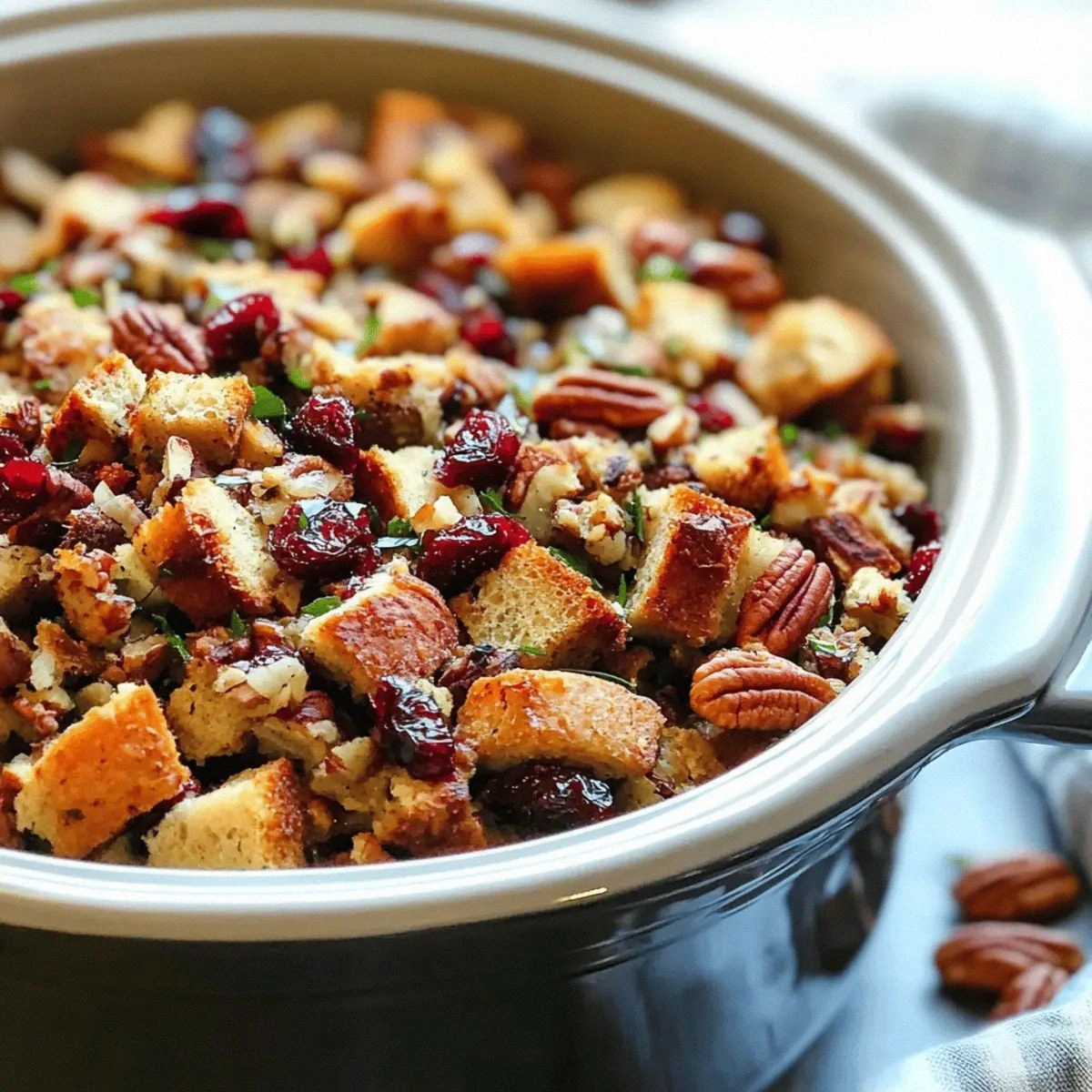
Picture this: it's two days before Thanksgiving, my kitchen looks like a flour bomb exploded, and I'm frantically trying to juggle three side dishes, a turkey, and dessert while my mother-in-law is en route from the airport. The stuffing? Completely forgotten until my husband casually mentions, "You did remember the stuffing, right?" Cue internal panic. But here's where the magic happened — instead of surrendering to store-bought mediocrity, I threw caution to the wind and created what is now hands-down the most requested dish at every holiday gathering. This slow cooker cranberry pecan stuffing isn't just good; it's the kind of recipe that makes people cancel other dinner plans just to ensure they get a serving.
What makes this version different from every other stuffing recipe cluttering the internet? For starters, I ditched the oven entirely and let the slow cooker work its low-and-slow magic. The result? Every cube of bread gets perfectly hydrated with herb-infused broth, the cranberries plump up like little jewels of tartness, and the pecans maintain that crucial crunch that most recipes lose by baking too hot. The slow cooker method means you're not wrestling for oven space during the holiday chaos, and the aroma that wafts through your house is like having a cozy autumn-scented candle that also happens to taste incredible.
I'll be completely honest with you — I tested this recipe seven times in two weeks because I couldn't stop eating it. My neighbors started asking if I was opening a restaurant. My kids began requesting it for Tuesday night dinner. Even my father, who claims to hate cranberries, asked for the recipe. The combination of rustic sourdough bread, toasty pecans, and those ruby-red cranberries creates this perfect balance of savory and sweet, soft and crunchy, familiar and exciting that makes everyone go back for thirds.
Okay, ready for the game-changer? We're using a technique I borrowed from French panade-making that ensures every bite is custardy in the middle with those coveted crispy edges. The secret lies in how we layer the ingredients and control the moisture — no more stuffing that's either a soggy mess or dry as the Sahara. By the time you finish reading this, you'll understand exactly why most stuffing recipes fail and how this method guarantees success every single time. Let me walk you through every single step — by the end, you'll wonder how you ever made it any other way.
What Makes This Version Stand Out
Taste Explosion: Most stuffing recipes taste like, well, seasoned bread. This version creates complex layers of flavor that dance between savory herbs, toasty nuts, and bright pops of cranberry. The slow cooking allows these flavors to meld into something greater than the sum of their parts, creating a depth that tastes like you spent hours laboring over it (spoiler: you didn't).
Texture Perfection: Here's where most recipes get it wrong — they either go too mushy or too dry. By using the slow cooker's gentle heat and our special layering technique, you get stuffing with the ideal texture: soft and custardy inside with golden, slightly crispy edges that provide that satisfying contrast. It's like the best parts of bread pudding met your favorite stuffing and had a beautiful baby.
Hands-Off Simplicity: While everyone else is babysitting their stuffing in the oven, basting and worrying about drying out, you'll be sipping wine and actually enjoying your guests. Once this goes into the slow cooker, it takes care of itself. No stirring, no checking, no stress. The slow cooker method is basically the culinary equivalent of having a personal chef who works for free.
Unexpected Elegance: The addition of pecans and cranberries elevates this from humble stuffing to a dish worthy of your finest china. The ruby cranberries provide jewel-like color and bright acidity that cuts through rich holiday meals, while toasted pecans add sophistication and crunch that will have your guests asking what your secret is.
Crowd-Pleasing Magic: This stuffing converts even the most stuffing-skeptical diners. I've served it to people who claim they "don't like stuffing" and watched them go back for seconds. The balance of flavors is so well-calibrated that it complements everything on your holiday table without overwhelming any dish. Plus, it works beautifully as leftovers — if you have any.
Make-Ahead Champion: Unlike oven-baked stuffing that needs to be served immediately, this slow cooker version is actually better when made ahead. The flavors deepen overnight, and reheating is a breeze. You can prep everything the day before, set it in the morning, and have perfect stuffing ready whenever you need it. Stress-free holidays? Yes, please.
Ingredient Flexibility: While I give you exact measurements, this recipe is incredibly forgiving. Need it gluten-free? Swap in your favorite GF bread. Want it vegan? Use vegetable broth and skip any butter. The method works regardless of your dietary needs, making it the most adaptable stuffing recipe you'll ever meet.
Alright, let's break down exactly what goes into this masterpiece...
Inside the Ingredient List
The Flavor Base: Building Complexity from the Ground Up
The foundation of any great stuffing starts with the bread, and here's where we'll spend a moment getting picky. Rustic sourdough isn't just a fancy choice — it's essential for structure and flavor. The natural tang of sourdough provides acidity that balances the sweetness of cranberries and richness of pecans, while its sturdy crumb stands up to soaking without disintegrating into mush. Skip the pre-cubed stuffing bread from the store; it's usually dried to oblivion and tastes like cardboard. Instead, grab a fresh loaf from your local bakery (or make friends with someone who bakes), cube it yourself, and let it stale overnight on your counter. The difference in both texture and flavor is like comparing a fresh garden tomato to one of those mealy supermarket imposters.
The Texture Crew: Creating Contrast in Every Bite
Dried cranberries and pecans aren't just along for the ride — they're the dynamic duo that makes this stuffing memorable. Cranberries bring concentrated bursts of tartness that prevent the dish from becoming one-note, while their chewy texture provides pleasant interruption to the soft bread. When selecting dried cranberries, look for ones that still have some pliability; rock-hard specimens have lost too much moisture and won't rehydrate properly. Pecans contribute buttery richness and that crucial crunch factor that separates exceptional stuffing from merely adequate versions. If pecans aren't your thing, walnuts work too, but they lack the same sweet, almost maple-like notes that make pecans perfect here.
The Unexpected Star: Vegetable Broth Magic
Most people grab whatever broth is on sale and call it a day, but the broth is where we're sneaking in layers of flavor that will have people asking for your recipe. A good quality vegetable broth forms the hydrating base, but we'll doctor it up with aromatics that infuse every cube of bread. Onion and celery aren't just supporting characters here; when sautéed until translucent and sweet, they create a flavor foundation that makes vegetarian stuffing taste anything but boring. The key is cooking them low and slow until they practically melt — this concentrates their sweetness and ensures they disappear into the final dish rather than creating unpleasant crunchy bits.
The Final Flourish: Herb Selection and Seasoning Strategy
Here's where personal preference comes into play, but let me guide you toward the promised land. Thyme and rosemary are classic for a reason — they echo the traditional holiday flavors while complementing rather than competing with the cranberries and pecans. Fresh herbs make a noticeable difference here; dried herbs tend to taste dusty and one-dimensional in slow-cooked dishes. If you must use dried, reduce quantities by half and add them to the sautéing vegetables so they have a chance to bloom and release their oils. Salt and pepper get added throughout the process rather than all at the end, building layers of seasoning that taste natural rather than salty.
Everything's prepped? Good. Let's get into the real action...
The Method — Step by Step
- Start by cubing your bread into ¾-inch pieces — not too small or they'll disappear into mush, not too large or they won't absorb enough flavor. Spread the cubes on a baking sheet and let them air-dry for at least 4 hours, preferably overnight. This step is crucial; trying to make stuffing with fresh, moist bread is like trying to build a house on quicksand. The bread needs to lose some moisture so it can soak up all the flavorful broth without becoming a sodden mess. If you're short on time, you can dry them in a 250°F oven for 45 minutes, but air-drying produces superior texture.
- While your bread dries, dice one medium onion and two stalks of celery into small, even pieces — about ¼-inch dice ensures they'll cook evenly and disappear into the final dish. Heat a tablespoon of butter or olive oil in a large skillet over medium heat, and when it shimmers, add the vegetables with a pinch of salt. This is where the flavor foundation gets built, so don't rush it. Cook slowly, stirring occasionally, until the vegetables are translucent and the onion has lost its sharp bite — about 8-10 minutes. Your kitchen should start smelling like Thanksgiving at this point.
- Toast your pecans now while the vegetables cook. Spread them on a dry baking sheet and slide them into a 350°F oven for 6-8 minutes, shaking the pan once halfway through. You're looking for them to darken slightly and smell fragrant, not burnt. Watch them like a hawk around minute 5 — nuts go from perfectly toasted to bitterly burnt faster than a toddler can destroy a clean room. Let them cool completely before roughly chopping; warm nuts are oily and hard to chop cleanly.
- Time to build flavors in your slow cooker. Grease the insert with butter or cooking spray, then create a layer using half of your dried bread cubes. Scatter half of your sautéed vegetables, ½ cup of dried cranberries, and ½ cup of chopped toasted pecans over the bread. Repeat with remaining bread, vegetables, cranberries, and pecans, finishing with the pecans on top — they'll stay crisper there. This layering ensures even distribution and prevents all the good stuff from sinking to the bottom.
- Now for the liquid magic: warm your vegetable broth until it's hot but not boiling — about 1 minute in the microwave should do it. Hot broth absorbs better into the dried bread and helps everything cook evenly. Add your chopped fresh herbs (2 tablespoons total — I like 1 tablespoon thyme leaves and 1 tablespoon minced rosemary), ½ teaspoon salt, and ¼ teaspoon pepper to the broth. Give it a good stir; the herbs should start infusing the broth immediately, creating an aromatic elixir that will transform ordinary bread into something extraordinary.
- Pour the herbed broth evenly over the layered ingredients in your slow cooker. Resist the urge to stir — disturbing the layers defeats the whole purpose. Instead, use the back of a spoon to gently press down on the top layer, ensuring all the bread gets moistened but not drowned. You're aiming for everything to be damp, not swimming. If you can see pools of liquid, you've added too much; the bread should absorb almost all of it.
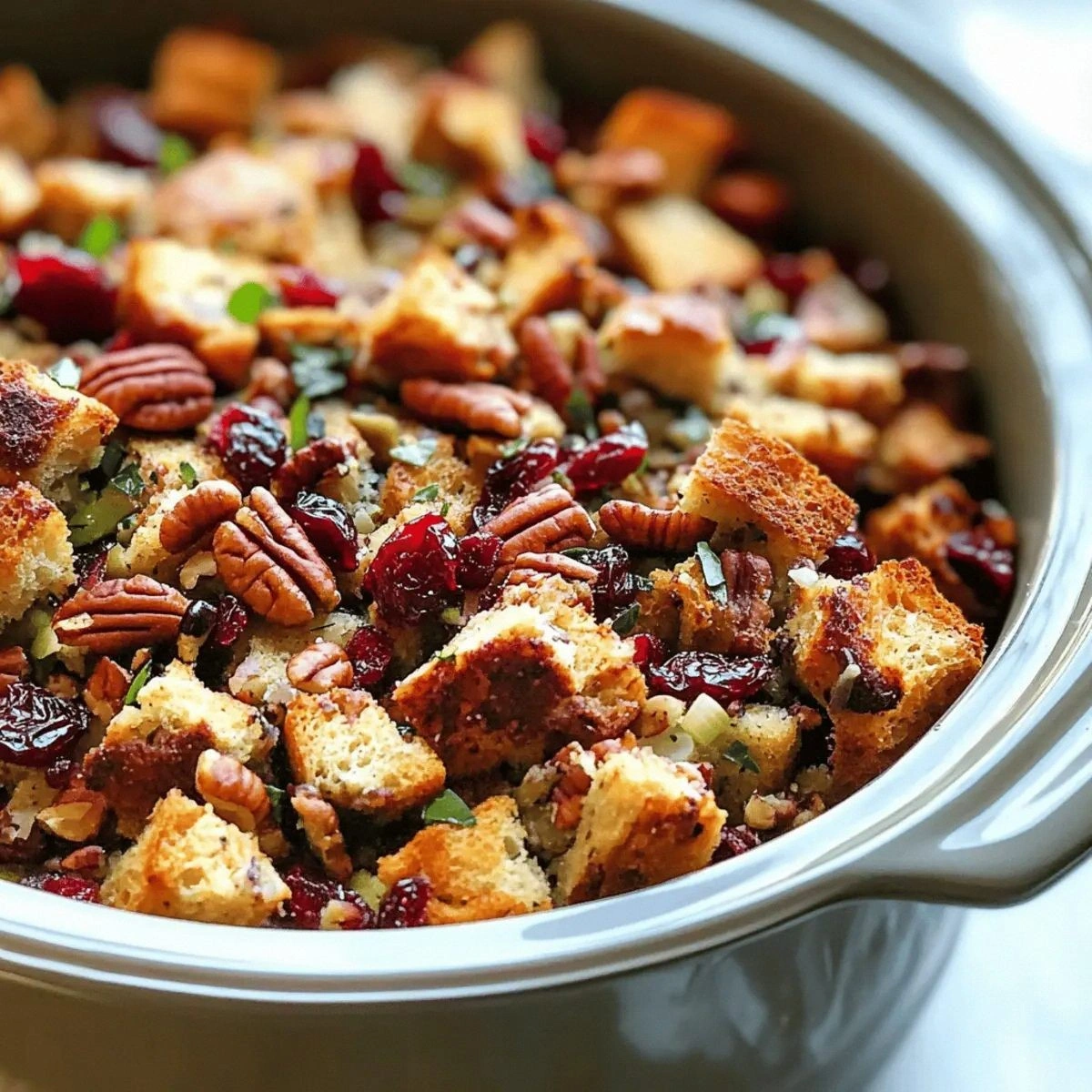
- Cover and cook on low for 4-5 hours or high for 2-3 hours. Here's the thing about slow cookers — they're all slightly different, so start checking at the lower end of the time range. You're looking for the stuffing to be hot throughout, with the edges starting to brown and crisp slightly. The cranberries should be plumped and jewel-like, the pecans should still have crunch, and the bread should be tender but not mushy. If the top looks too dry, drizzle with 2-3 tablespoons of additional broth, but resist the urge to add too much.
- The final step is crucial — let the stuffing rest for 10 minutes with the slow cooker on warm before serving. This allows the flavors to settle and the texture to set up properly. If you serve immediately, it might seem too wet; those few extra minutes let excess moisture evaporate and everything firms up slightly. Plus, this gives you time to finish the rest of your meal, pour yourself a glass of wine, and bask in the knowledge that you've just created the best stuffing of your life with minimal effort.
That's it — you did it. But hold on, I've got a few more tricks that'll take this to another level...
Insider Tricks for Flawless Results
The Temperature Rule Nobody Follows
Here's where most home cooks go wrong — they serve their stuffing straight from the slow cooker without considering temperature contrast. The best stuffing has hot, tender interior with slightly crispy edges, but it shouldn't be served at molten lava temperature. Let it cool for 5-7 minutes after cooking, then fluff with a fork to create air pockets and prevent it from becoming dense. The ideal serving temperature is hot enough to melt butter but cool enough that you don't burn your tongue — around 140°F if you're being precise. This small wait time also allows the starches to set up, preventing that disappointing mushy texture that plagues lesser stuffings.
Why Your Nose Knows Best
Trust your sense of smell during cooking — it's your most reliable indicator of doneness. When the stuffing is ready, your kitchen will fill with the aroma of toasted bread, sweet cranberries, and fragrant herbs. If you smell burning or overly toasted notes, check immediately; slow cookers can develop hot spots that overcook the edges. Conversely, if you don't smell much after 3 hours on low, your slow cooker might run cool, and you'll need more time. This sensory checkpoint has saved me more times than I can count, especially when cooking in an unfamiliar kitchen during holiday gatherings at relatives' houses.
The 5-Minute Rest That Changes Everything
I cannot stress this enough — do not skip the resting period. I know, I know, everyone's hungry and hovering, but those five minutes of patience pay dividends in texture and flavor. During the rest, the bread finishes absorbing any remaining liquid, the flavors meld and deepen, and the temperature evens out throughout the dish. It's like letting a steak rest after cooking — the difference between good and restaurant-quality. Use this time to finish your gravy, carve the turkey, or just breathe and enjoy the fact that you've mastered holiday cooking.
The Secret Ingredient You're Missing
Want to know what takes this stuffing from excellent to absolutely legendary? A tablespoon of maple syrup stirred into the broth before pouring over the bread. Not enough to make it sweet — just enough to round out the flavors and add subtle complexity that makes people ask what your secret is. The maple bridges the gap between the savory herbs and sweet cranberries, creating harmony that tastes like autumn in New England. I've been adding this for years, and it's my most requested variation. Don't tell anyone I told you though — it's nice to have a signature move that impresses the relatives.
Creative Twists and Variations
This recipe is a playground. Here are some of my favorite ways to switch things up:
The Southern Belle
Swap the pecans for toasted chopped pecans mixed with a handful of crumbled bacon, add a diced Granny Smith apple for tartness, and replace half the vegetable broth with chicken stock. The result tastes like Thanksgiving in Savannah — familiar but with that certain Southern charm that makes everyone ask for your recipe. The bacon fat mingles with the cranberries to create a sweet-savory balance that's absolutely addictive.
The Mediterranean Escape
Replace cranberries with golden raisins soaked in warm white wine, swap pecans for toasted pine nuts, and add ¼ cup each of chopped kalamata olives and sun-dried tomatoes. Season with oregano and basil instead of thyme and rosemary. Suddenly your holiday stuffing transports everyone to a Greek island, where the flavors are brighter and the mood is lighter. My aunt requests this version for Easter every year.
The Decadent Upgrade
Add ½ cup of diced dried figs along with the cranberries, use toasted hazelnuts instead of pecans, and fold in 2 tablespoons of cognac with the broth. This version tastes like something served in a French chateau — sophisticated and rich, with layers of flavor that unfold slowly. Perfect for when you want to impress without looking like you're trying too hard.
The Health Nut
Use sprouted grain bread, add ½ cup of cooked quinoa for extra protein, swap in reduced-sodium vegetable broth, and add a handful of chopped kale or spinach. The result is actually good for you while still tasting indulgent — a holiday miracle if there ever was one. My health-conscious cousin brings this to every potluck and watches smugly while people devour it.
The Spicy Southwest
Add a diced jalapeño to the sautéing vegetables, swap the herbs for cilantro and cumin, use pepitas instead of pecans, and add a handful of dried cherries along with the cranberries. The result has gentle heat and Southwestern flair that pairs beautifully with turkey or can stand alone as a vegetarian main. My neighbor from Arizona brings this to every football Sunday.
The Breakfast Stuffing
Add cooked breakfast sausage, use apple cider instead of half the broth, and serve topped with a fried egg. Suddenly last night's side dish becomes tomorrow's brunch sensation. The sweet-savory combination with the runny egg yolk creates a breakfast that rivals any restaurant. My college-age nephew makes this every time he visits.
Storing and Bringing It Back to Life
Fridge Storage
Leftover stuffing keeps beautifully in an airtight container in the refrigerator for up to 4 days. The flavors actually deepen overnight, making day-two stuffing arguably better than fresh. Store it in shallow containers so it cools quickly and evenly — deep containers can harbor bacteria in the middle. If you know you'll have leftovers, consider undercooking slightly by 30 minutes so when you reheat, you don't end up with overdone stuffing.
Freezer Friendly
This stuffing freezes exceptionally well for up to 3 months. Portion it into meal-sized packages before freezing — trying to break off a chunk from a solid block is about as fun as it sounds. Wrap portions first in plastic wrap, then in foil, and label with the date. When ready to use, thaw overnight in the refrigerator, then reheat with a splash of broth to restore moisture. The texture won't be quite as perfect as fresh, but it's miles better than no stuffing at all.
Best Reheating Method
For best results, reheat in a covered baking dish in a 325°F oven for 20-25 minutes, adding 2-3 tablespoons of broth to restore moisture. If you're in a hurry, the microwave works too — just add a damp paper towel over the top and heat in 30-second intervals, stirring between each. The key is adding moisture back in; stuffing tends to dry out as it sits. For a real treat, reheat portions in a waffle iron — the crispy edges and tender interior create a texture that's completely addictive.