Picture this: I’m standing in my tiny kitchen, the oven humming like a contented cat, and a rogue batch of sweet potatoes has just escaped the roasting pan, smearing orange goo across the countertop. I swear, I was about to call it a disaster when my roommate walked in, sniffed the air, and shouted, “What on earth is that amazing smell?” That moment sparked a dare – could I turn those caramelized tubers into something that would make even the most skeptical meat‑lover gasp in delight? Spoiler alert: I did, and I’m about to hand you the exact playbook.
The moment the sweet potatoes hit the heat, the kitchen transformed into a symphony of crackles and sweet aromas, like a caramel orchestra tuning up for a concert. The scent of roasting earth mingled with the subtle hint of olive oil, and every time I opened the oven, a warm gust of amber‑gold steam brushed my face, making my eyes water in the best possible way. I could hear the faint sizzle of the skin crisping, feel the heat radiating from the tray, and taste the promise of a buttery interior that would soon be cradled by a silky burrata cloud. It was a full‑sensory overload that made my stomach do a little happy dance.
Most stuffed sweet potato recipes either drown the natural sweetness in heavy sauces or skimp on texture, leaving you with a soggy, one‑note experience. I’ve tried those, and trust me, they’re about as exciting as plain oatmeal. This version, however, is a meticulously balanced masterpiece: the sweet potato’s caramelized flesh meets a bright, herbaceous sage‑parsley pesto, a crunchy walnut crunch, and the molten, milky center of burrata that oozes like liquid gold. The contrast is so striking that your taste buds will feel like they’ve been invited to a high‑stakes flavor duel, and the winner? Absolutely every bite.
And here’s the kicker – I’m throwing a surprise ingredient into the mix that most people overlook: fresh sage. Its earthy, almost piney notes cut through the richness of the cheese and nuts, delivering a depth you’d expect from a five‑star restaurant. I dare you to taste this and not go back for seconds. Let me walk you through every single step — by the end, you’ll wonder how you ever made it any other way.
What Makes This Version Stand Out
- Flavor Explosion: The sage‑parsley pesto brings a garden‑fresh brightness that lifts the sweet potato’s natural sugars, while the burrata adds a luxurious creaminess that feels like a decadent hug.
- Texture Symphony: You get a crispy skin, fluffy interior, crunchy walnuts, and the silky pull of cheese – each bite is a layered experience that keeps you reaching for more.
- Simplicity Meets Sophistication: Despite the impressive result, the ingredient list is short, the steps are straightforward, and you won’t need any fancy equipment.
- Unique Ingredient Star: Fresh sage isn’t just a garnish; it’s the secret weapon that transforms a standard pesto into something unforgettable.
- Crowd‑Pleaser Factor: Even the pickiest eaters rave – the sweet‑savory balance is universally appealing, making it perfect for dinner parties or family meals.
- Ingredient Quality: Using a high‑quality olive oil and authentic burrata elevates the dish from home‑cooked to restaurant‑worthy.
- One‑Pan Efficiency: Roast the potatoes and toast the nuts on the same sheet, cutting down on cleanup while maximizing flavor.
- Make‑Ahead Magic: You can prep the pesto and toast the nuts a day ahead, then assemble and bake when you’re ready to serve.
Inside the Ingredient List
The Flavor Base
Fresh Sage Leaves: Sage is the unsung hero of this dish. Its earthy, slightly peppery flavor cuts through the richness of the burrata and adds a pine‑like aroma that makes the palate feel refreshed. Skip it, and you’ll lose that signature herbaceous bite that sets this recipe apart. If you can’t find sage, a blend of fresh thyme and rosemary can mimic the depth, but the result won’t be quite the same.
Fresh Parsley: Parsley brings a burst of green freshness that balances the sweet potato’s earthiness. It also adds a pop of color that makes the plate look as good as it tastes. You can swap it for cilantro for a brighter, citrusy twist, but be aware it will change the flavor profile significantly.
The Texture Crew
Toasted Walnuts: These little nuggets provide a crunchy contrast that prevents the dish from feeling too soft. Toast them lightly until they’re golden and fragrant; this step intensifies their nutty flavor and brings out a subtle sweetness that echoes the potatoes. Pecans are a great alternative if you prefer a slightly sweeter, buttery crunch.
Burrata Cheese: The star of the show, burrata’s creamy interior melts into the warm sweet potato, creating a luscious sauce that coats every bite. If you can’t locate burrata, fresh mozzarella combined with a splash of heavy cream can simulate the texture, though you’ll miss the delicate milky tang.
The Unexpected Star
Olive Oil: A good quality olive oil adds richness and helps the sweet potatoes develop that perfect caramelized crust. Extra‑virgin olive oil brings a peppery note that pairs beautifully with the sage, while a regular olive oil offers a milder backdrop that lets the other flavors shine. Drizzle it over the potatoes before roasting to ensure even browning.
Garlic Clove: A single clove of garlic, minced, infuses the pesto with a subtle pungency that deepens the overall flavor. Too much garlic can overwhelm the delicate burrata, so keep it modest. If you’re a garlic lover, feel free to add a half‑clove extra, but remember to taste as you go.
The Final Flourish
Grated Parmesan Cheese: Parmesan adds a salty, umami punch that rounds out the pesto and complements the sweet potatoes. It also helps the pesto adhere to the potato flesh. For a vegan twist, nutritional yeast offers a similar cheesy note without the dairy.
Juice of 1/2 Lemon: The lemon juice brightens the pesto, cutting through the richness and adding a zingy lift that makes the flavors pop. It also helps keep the parsley vibrant. If you’re out of lemons, a splash of white wine vinegar can work in a pinch.
Everything's prepped? Good. Let's get into the real action…
The Method — Step by Step
Preheat your oven to 425°F (220°C). While the oven warms up, scrub four medium sweet potatoes under cold water, pat them dry, and prick each one several times with a fork. This prevents them from bursting later and helps the heat penetrate evenly. Toss the potatoes with 2 tablespoons of olive oil, a generous pinch of sea salt, and cracked black pepper, ensuring every curve is lightly coated. Place them on a baking sheet lined with parchment, and set them aside while the oven reaches temperature.
Now, let’s toast the walnuts. Spread ½ cup of walnut halves on the same baking sheet (or a separate one if you prefer) and slide them into the oven for about 5‑7 minutes, stirring halfway. You’ll hear a faint crackle as they release their oils, and the kitchen will fill with a nutty aroma that’s practically a hug for your nose. Keep a close eye – they can go from golden to burnt in seconds. Once toasted, transfer them to a bowl and set aside to cool.
Kitchen Hack: Toast walnuts in a dry skillet over medium heat if you’re short on oven space; this gives you more control and a quicker result.While the nuts toast, start the pesto. In a food processor, combine the fresh sage leaves (about ¼ cup loosely packed), the parsley (¼ cup), the garlic clove, ¼ cup grated Parmesan, and the juice of half a lemon. Pulse a few times to break down the herbs, then drizzle in 2 tablespoons of olive oil while the processor is running, creating a smooth, glossy sauce. Taste and adjust with a pinch of salt if needed. The pesto should be bright green, aromatic, and slightly thick – it will loosen up when mixed with the sweet potato flesh later.
Slide the seasoned sweet potatoes into the preheated oven. Roast them for 35‑45 minutes, turning once halfway through. You’ll know they’re done when the skins are crisped and a fork slides in with almost no resistance, the interior feeling like warm, buttery silk. The edges will start pulling away from the skin, a visual cue that they’re ready for the next step. While they roast, the kitchen will be saturated with a sweet, caramelized perfume that’s impossible to ignore.
When the potatoes are tender, remove them from the oven and let them cool just enough to handle – about 5 minutes. Slice each potato lengthwise, being careful not to cut all the way through; you want a pocket that will hold the stuffing. Gently fluff the interior with a fork, creating a little well for the pesto and nuts.
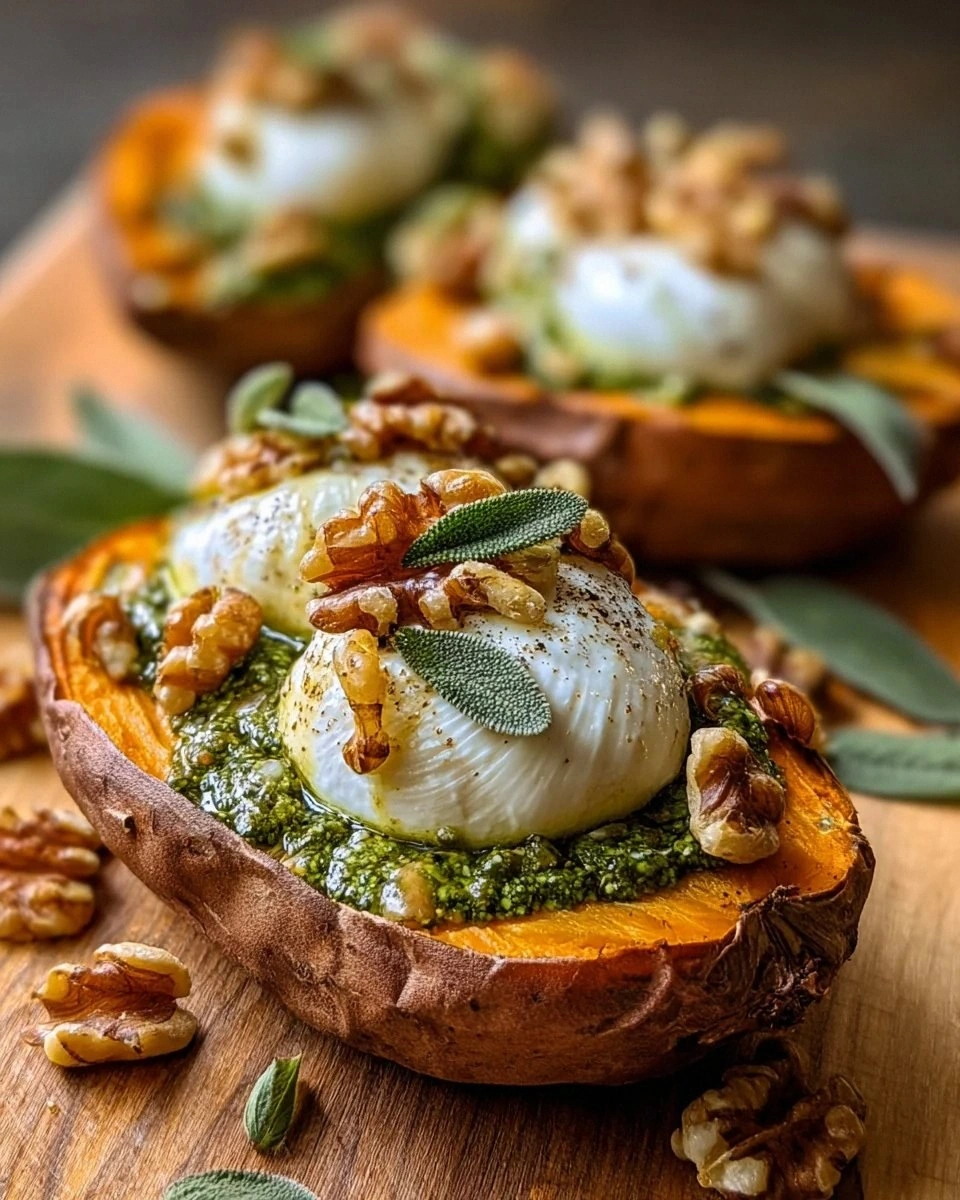
Now comes the assembly, the part where everything meets. Spoon a generous dollop of the sage‑parsley pesto into each potato pocket, spreading it evenly so the green speckles peek through the orange flesh. Sprinkle the toasted walnuts over the pesto, letting them nestle into the crevices. Finally, tear the burrata into pieces and place them on top – the cheese will melt into the hot potato, creating a luscious sauce that pools at the base.
Watch Out: If you over‑bake the burrata, it can turn rubbery; add it in the last 5 minutes of baking to keep it melt‑in‑your‑mouth.Return the assembled potatoes to the oven for a final 5‑7 minutes, just long enough for the burrata to soften and the edges of the potatoes to crisp up a bit more. You’ll see the cheese start to ooze, creating little rivulets of creamy goodness that cascade down the sides. The aroma at this stage is pure magic – a blend of roasted sweet, herbaceous pesto, and melting cheese that will have everyone gathering around the kitchen.
Remove the potatoes from the oven, drizzle a final drizzle of olive oil, and sprinkle a pinch of cracked black pepper and an extra scattering of fresh parsley for color. Serve immediately while the cheese is still molten and the potatoes are hot. The first bite should deliver a burst of sweet, salty, nutty, and herbaceous flavors that dance on your tongue. And remember – I dare you to taste this and not go back for seconds.
That's it — you did it. But hold on, I've got a few more tricks that'll take this to another level...
Insider Tricks for Flawless Results
The Temperature Rule Nobody Follows
Most home cooks bake at 350°F, but sweet potatoes need a higher heat to develop that caramelized skin without drying out. Cranking the oven to 425°F creates a rapid Maillard reaction, giving you that coveted crisp edge while keeping the interior buttery. I once tried a lower temperature and ended up with soggy skins – a total letdown. Trust the heat; it’s the secret to that restaurant‑grade finish.
Why Your Nose Knows Best
When the nuts are toasting, rely on the scent rather than the timer. A nutty, fragrant aroma signals they’re perfectly done. If you wait too long, they’ll turn bitter and ruin the dish’s balance. My friend once over‑toasted his walnuts and the whole batch tasted like burnt toast – a lesson learned the hard way.
The 5‑Minute Rest That Changes Everything
After you pull the potatoes from the oven, let them rest for exactly five minutes before slicing. This short pause allows the steam inside to redistribute, making the flesh fluffier and preventing the cheese from spilling out too early. It’s a tiny step that dramatically improves texture.
Layering Flavors Like a Pro
Don’t dump the pesto straight onto the potato. Instead, spread a thin base layer first, then add a second dollop after the cheese has melted. This double‑layer technique ensures every bite has a balanced hit of herb, nut, and cream. I’ve seen people skip this and end up with a single‑note flavor that feels flat.
Finish with a Pop of Acid
A final squeeze of fresh lemon juice right before serving brightens the whole plate, cutting through the richness of the burrata and walnut oil. It’s the culinary equivalent of turning up the treble on a song – everything becomes clearer and more vibrant. If you forget, the dish can feel a bit heavy after the first few bites.
Creative Twists and Variations
This recipe is a playground. Here are some of my favorite ways to switch things up:
Spicy Chipotle Kick
Add a teaspoon of chipotle adobo sauce to the pesto for smoky heat. The spice pairs beautifully with the sweet potato’s natural sugars, creating a sweet‑heat balance that’s perfect for cooler evenings.
Mediterranean Mediterranean
Swap the walnuts for toasted pine nuts, and stir in a handful of Kalamata olives into the pesto. The briny olives bring a Mediterranean flair, while pine nuts add a buttery crunch.
Vegan Dream
Replace burrata with a generous scoop of cashew cream (soaked cashews blended with lemon juice and nutritional yeast). Use nutritional yeast in place of Parmesan, and you have a fully plant‑based version that still feels indulgent.
Autumn Harvest
Fold in roasted butternut squash cubes and a drizzle of maple syrup into the stuffing. The extra sweetness deepens the autumn vibe, and the maple adds a caramel note that echoes the roasted potatoes.
Herb Garden Remix
Swap sage for fresh thyme and add a handful of mint leaves to the pesto. This creates a brighter, slightly floral profile that’s perfect for spring brunches.
Cheese Lover’s Upgrade
Combine burrata with a crumble of feta for a tangy contrast. The feta’s salty bite cuts through the creaminess, giving each bite a dynamic flavor swing.
Storing and Bringing It Back to Life
Fridge Storage
Place any leftovers in an airtight container and store them in the refrigerator for up to three days. The sweet potatoes retain their texture, and the pesto stays vibrant if you keep the nuts separate and add them just before reheating.
Freezer Friendly
Both the roasted potatoes and the pesto freeze beautifully. Portion the potatoes on a baking sheet, freeze solid, then transfer to a zip‑top bag. The pesto can be stored in a small freezer‑safe jar. When ready, thaw in the refrigerator overnight and reheat as directed.
Best Reheating Method
Preheat your oven to 350°F (175°C), place the potatoes on a baking sheet, and cover loosely with foil. Add a tiny splash of water (about a tablespoon) to the foil packet – this creates steam that revives the fluffy interior without drying it out. Heat for 10‑12 minutes, then uncover for the last 2 minutes to re‑crisp the skin. Finish with a fresh drizzle of olive oil and a pinch of pepper for that just‑cooked feel.