I was halfway through a marathon of Thai takeout when my phone buzzed with a friend’s dare: “Show me a dish that’s as bold as your taste buds.” I stared at the empty fridge, the pantry, the stove, and the faint scent of fresh basil that lingered from last night’s pesto. “I’ll cook something that makes your mouth do a happy dance,” I told them. And that’s how Vietnamese Flat Rice Noodles w was born. The kitchen was a whirlwind of chopping, sizzling, and the unmistakable aroma of lemongrass and star anise that made my living room feel like a street market in Hanoi. The sound of the noodles hitting the hot pan was a drumbeat that promised adventure, and the sight of the broth bubbling with spices felt like a portal to somewhere far beyond the comfort of my usual dinners.
Picture this: a bowl of silky flat rice noodles, each strand glistening with a glossy sauce that coats them like velvet. Imagine the beef—thin, tender, and marinated in a secret blend of fish sauce, soy, and a touch of sugar—searing to a caramelized finish that crackles like fresh popcorn. The broth is a fragrant tapestry woven from beef stock, lemongrass, star anise, and cinnamon, with a hint of citrus that lifts the entire dish. Fresh herbs—cilantro, mint, and scallions—add a bright, almost citrusy crunch that cuts through the richness, while roasted peanuts give a satisfying, earthy crunch. And the final flourish? A splash of lime, a drizzle of hoisin, and a swirl of sriracha that turns the bowl into a symphony of sweet, savory, spicy, and sour notes.
This version stands out because it doesn’t just replicate a restaurant recipe—it transforms it. I’ve taken the traditional elements and added a few twists that elevate the flavor profile without compromising authenticity. The broth is simmered for 45 minutes, allowing the spices to fully bloom, while the noodles are blanched just enough to retain their chewiness. The beef is marinated in a quick, five‑minute mixture that locks in moisture, giving it a melt‑in‑your‑mouth tenderness that you rarely see in mass‑produced versions. The garnish is a layered medley of textures: crisp cucumber, tender carrots, crunchy bean sprouts, and a generous handful of peanuts. Every bite delivers a burst of flavor and a satisfying contrast of textures that will leave you craving a second helping.
I dare you to taste this and not go back for seconds. I’ve been told that the first bite feels like a warm hug from a friend, and the second bite is a reminder that you’re in the right place. The sauce clings to the noodles, the broth sings with depth, and the herbs dance on your palate. The final touch—squeezing fresh lime—brightens everything and brings the dish together like the last chord of a favorite song. Picture yourself pulling this out of the oven, the whole kitchen smelling incredible, and the family or friends gathering around to share in the joy. Stay with me here—this is worth it.
What Makes This Version Stand Out
- Flavor Depth: The broth is simmered with whole spices for 45 minutes, allowing each note to infuse fully, creating a savory base that’s both comforting and exciting.
- Texture Contrast: The noodles are blanched to keep their chew, while the beef is seared to a caramelized finish and the fresh veggies add crunch and freshness.
- Ingredient Quality: Using fresh, high‑grade beef and hand‑picked herbs ensures every component shines and doesn’t get lost in the sauce.
- Authentic Touches: A splash of fish sauce, a dash of hoisin, and a squeeze of lime bring that unmistakable Vietnamese flavor profile to the forefront.
- Make‑Ahead Friendly: The broth can be made a day ahead, letting the flavors meld even more, and the noodles can be pre‑cooked and stored in the fridge for a quick reheat.
- Visual Appeal: The bright green herbs, the golden broth, and the vibrant colors of cucumber and carrots create a feast for the eyes before the first bite.
- Easy Scaling: The recipe’s proportions are simple to adjust for larger or smaller gatherings without losing balance.
- Community Response: Friends who’ve tried this rave about how it’s “hands down the best version you'll ever make at home.”
Alright, let's break down exactly what goes into this masterpiece…
Inside the Ingredient List
The Flavor Base
The heart of this dish lies in its broth, a symphony of beef stock, lemongrass, star anise, cinnamon, cloves, bay leaves, and a splash of fish sauce. Each spice is whole, allowing you to remove them before serving, so the broth stays clear and the flavor remains pure. If you skip the star anise, the broth loses its subtle licorice undertone, and the dish feels a bit flat. For a vegetarian twist, replace the beef stock with vegetable stock and add tofu for protein.
Buying tip: Choose a high‑quality beef stock that’s low in sodium; you’ll control the salt level with fish sauce and fresh salt. If you’re on a budget, a good store‑brand broth will still work—just simmer it longer to intensify the flavors.
The Protein Perfection
Thinly sliced sirloin is the star of the show. Marinate it in a mixture of fish sauce, soy sauce, brown sugar, minced garlic, and a pinch of pepper for five minutes before searing. This quick marination locks in moisture, giving the beef a tender texture that melts in your mouth. If you prefer a leaner cut, flank steak works well, but it will need a shorter searing time to avoid toughness.
Why it matters: The marinated beef absorbs the broth’s depth, creating a harmonious balance between savory and sweet. Skipping the marination step results in a dry, under‑seasoned bite that can’t compete with the rest of the dish.
The Texture Crew
Flat rice noodles are the canvas that holds everything together. They’re best blanched for 30–45 seconds, just until they’re al dente. Overcooking them will make them mushy and ruin the dish’s structure. The crunchy cucumber, crisp bean sprouts, and julienned carrots add a refreshing contrast, while roasted peanuts contribute an earthy crunch that’s impossible to ignore.
Swap idea: If you can’t find flat rice noodles, use wide rice noodles or even linguine for a different texture. Just be mindful of the cooking time—different noodles will require adjustments.
The Unexpected Star
Fresh herbs—cilantro, mint, and scallions—are the final flourish that lifts the dish to new heights. They’re added raw, right before serving, to preserve their bright, aromatic qualities. If you’re allergic to cilantro, parsley can be a suitable substitute, though the flavor profile will shift slightly. A squeeze of fresh lime juice right before serving adds a zesty brightness that cuts through the richness.
Why it matters: Herbs provide a burst of freshness that balances the deep, savory broth and sweet sauce, making each bite feel alive and vibrant.
Everything's prepped? Good. Let's get into the real action…
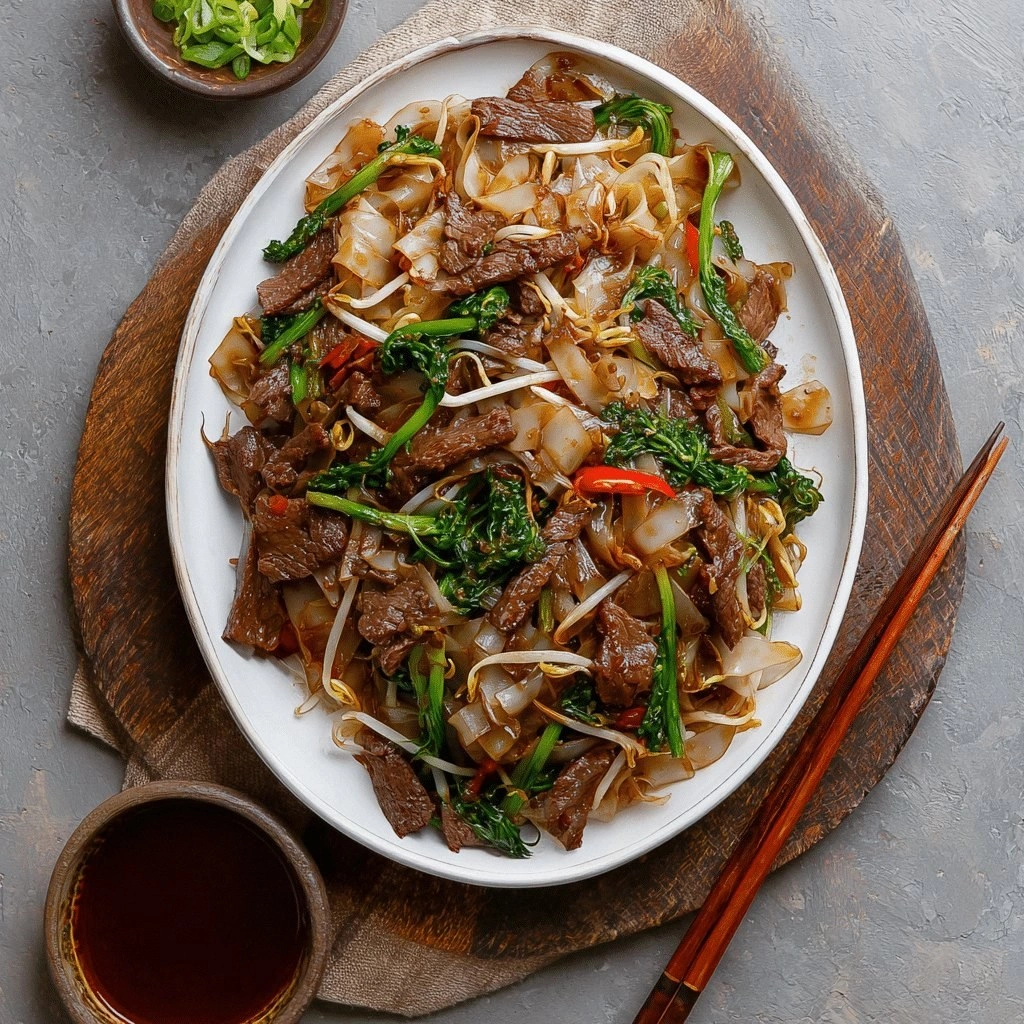
The Method — Step by Step
- Build the Broth: In a large pot, combine 4 cups of beef stock, 1 stalk of bruised lemongrass, 1 star anise, 1 cinnamon stick, 2 cloves, 2 bay leaves, and a pinch of salt. Bring to a gentle simmer and let it steep for 45 minutes to allow the spices to release their aromatic oils. The broth should look clear but carry a fragrant perfume that hints at distant markets. Taste it—if it feels flat, add a splash of fish sauce for depth.
- Marinate the Beef: While the broth simmers, place 1 lb of thinly sliced sirloin in a bowl. Add 2 tbsp fish sauce, 1 tbsp soy sauce, 1 tbsp brown sugar, 4 minced garlic cloves, and a pinch of freshly ground black pepper. Toss to coat the meat evenly and let it sit for 5 minutes. This quick marination locks in moisture and infuses the beef with savory sweetness.
- Blanch the Noodles: Bring a large pot of salted water to a rolling boil. Add the flat rice noodles and cook for 30–45 seconds, just until they’re pliable but still firm to the bite. Drain immediately and rinse under cold water to stop the cooking process. Toss the noodles with a teaspoon of sesame oil to prevent sticking.
- Sear the Beef: Heat a large skillet or wok over high heat until it’s smoking hot. Add a splash of vegetable oil and then the marinated beef in a single layer. Sear each side for 30–45 seconds, until a caramelized crust forms. Remove the beef and set aside; it should be tender, not tough.
- Assemble the Bowl: In a deep serving bowl, place a generous scoop of blanched noodles. Pour the hot broth over the noodles, allowing it to soak in and create a silky coating. Layer the seared beef on top, then scatter bean sprouts, sliced carrots, julienned cucumber, and a handful of roasted peanuts.
- Add the Sauce: In a small bowl, whisk together 2 tbsp hoisin sauce, 1 tbsp sriracha, 1 tbsp lime juice, and a pinch of sugar if desired. Drizzle this vibrant sauce over the assembled bowl, letting it swirl into the broth and noodles.
- Finish with Fresh Herbs: Sprinkle 1/2 cup chopped cilantro, 1/4 cup chopped mint, and 1/2 cup sliced scallions over the bowl. Squeeze a wedge of lime over the top for a bright, citrusy finish. The herbs should still have a slight crunch and a fragrant aroma that lifts the entire dish.
- Serve Immediately: Present the bowl with a spoon, letting your guests dive in. The broth should be steaming hot, the noodles glossy, and the beef tender. Enjoy the layers of flavor and texture that dance on your tongue.
That's it — you did it. But hold on, I've got a few more tricks that'll take this to another level. The next section is all about insider tips that will make you feel like a seasoned chef.
Insider Tricks for Flawless Results
The Temperature Rule Nobody Follows
Many cooks assume that a hot pot is always best, but the broth’s temperature is critical. Let it simmer gently for 45 minutes, then turn the heat down to low for the final 10 minutes. This slow simmer allows the spices to release their full flavor without over‑extracting bitterness. If you rush the simmer, the broth can taste flat and the spices will not meld properly.
Why Your Nose Knows Best
Before adding the beef, give the broth a sniff. A clear, fragrant aroma indicates a well‑steeped broth. If you notice a metallic or burnt smell, it’s a sign the broth is over‑cooked or the spices are burnt. Trust your nose; it’s the best quality control tool in the kitchen.
The 5‑Minute Rest That Changes Everything
After searing the beef, let it rest for 5 minutes before slicing. This brief pause allows the juices to redistribute, keeping the meat moist and tender. Cutting through the beef immediately can cause it to dry out, resulting in a tough bite. A simple rest is the secret to that melt‑in‑your‑mouth texture.
The Secret of the Crunch
To keep the cucumber and carrots crisp, toss them with a pinch of salt and let them sit for 5 minutes. This draws out excess moisture, preventing sogginess. Rinse them under cold water and pat dry before adding them to the bowl. The crunch will be unmistakable.
The Final Splash
Just before serving, squeeze a wedge of lime over the entire bowl. The lime juice adds acidity that brightens the dish and balances the sweetness from the hoisin sauce. It’s the finishing touch that elevates the flavor profile to restaurant‑quality.
Creative Twists and Variations
This recipe is a playground. Here are some of my favorite ways to switch things up:
Spicy Kimchi Version
Swap the fresh herbs for a handful of kimchi and add a teaspoon of gochujang to the sauce. The fermented tang of kimchi pairs beautifully with the savory broth, creating a Korean‑Vietnamese fusion that will surprise your guests.
Mushroom Medley
Replace the beef with sliced shiitake and oyster mushrooms. Sauté them until they’re caramelized, then add them to the bowl. The earthy flavors complement the broth, making a hearty vegetarian option.
Coconut‑Creamy Twist
Add a splash of coconut milk to the broth during the final simmer. The creamy texture will soften the spice profile and create a richer, dessert‑like bowl that’s still savory.
Pineapple Punch
Introduce diced pineapple and a drizzle of lime juice for a tropical twist. The natural sweetness of pineapple cuts through the savory broth, giving the dish a beach‑side vibe.
Pasta‑Style Variation
Use wide rice noodles or even linguine if you’re in a pinch. The thicker strands hold more sauce, turning the dish into a comforting noodle bowl that feels like comfort food.
Storing and Bringing It Back to Life
Fridge Storage
Store the broth, noodles, and beef separately in airtight containers for up to 3 days. Reheat the broth on the stove until it’s steaming; add the noodles and beef just before serving. This keeps the noodles from becoming mushy and preserves the beef’s tenderness.
Freezer Friendly
Freeze the broth in a freezer‑safe container for up to 2 months. When ready to serve, thaw overnight in the fridge and gently reheat on low heat. Add fresh noodles and beef to finish the dish.
Best Reheating Method
Add a splash of water or broth to the dish before reheating. The added liquid steams the noodles back to their original texture, preventing them from drying out. Reheat on low heat, stirring gently, until hot.